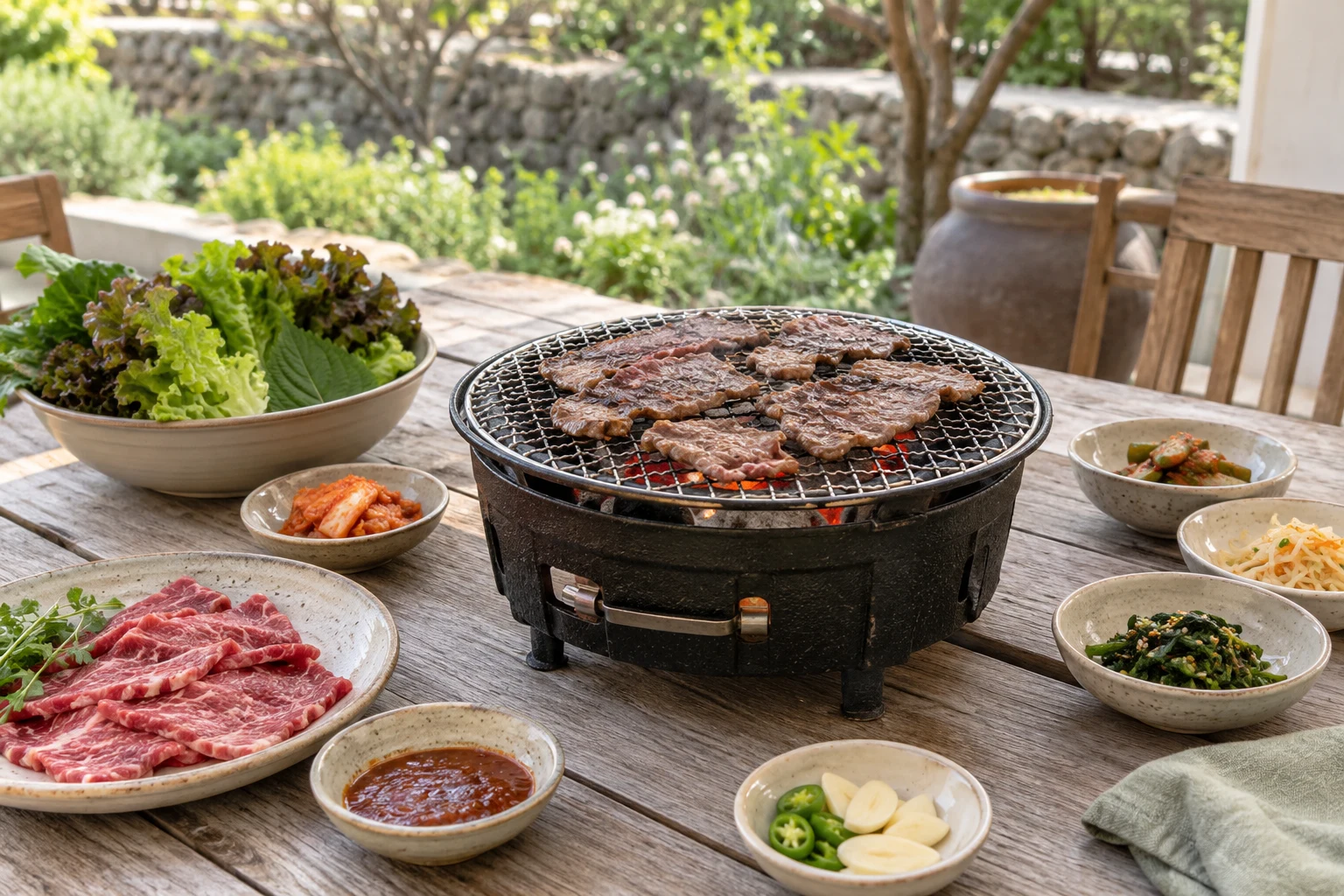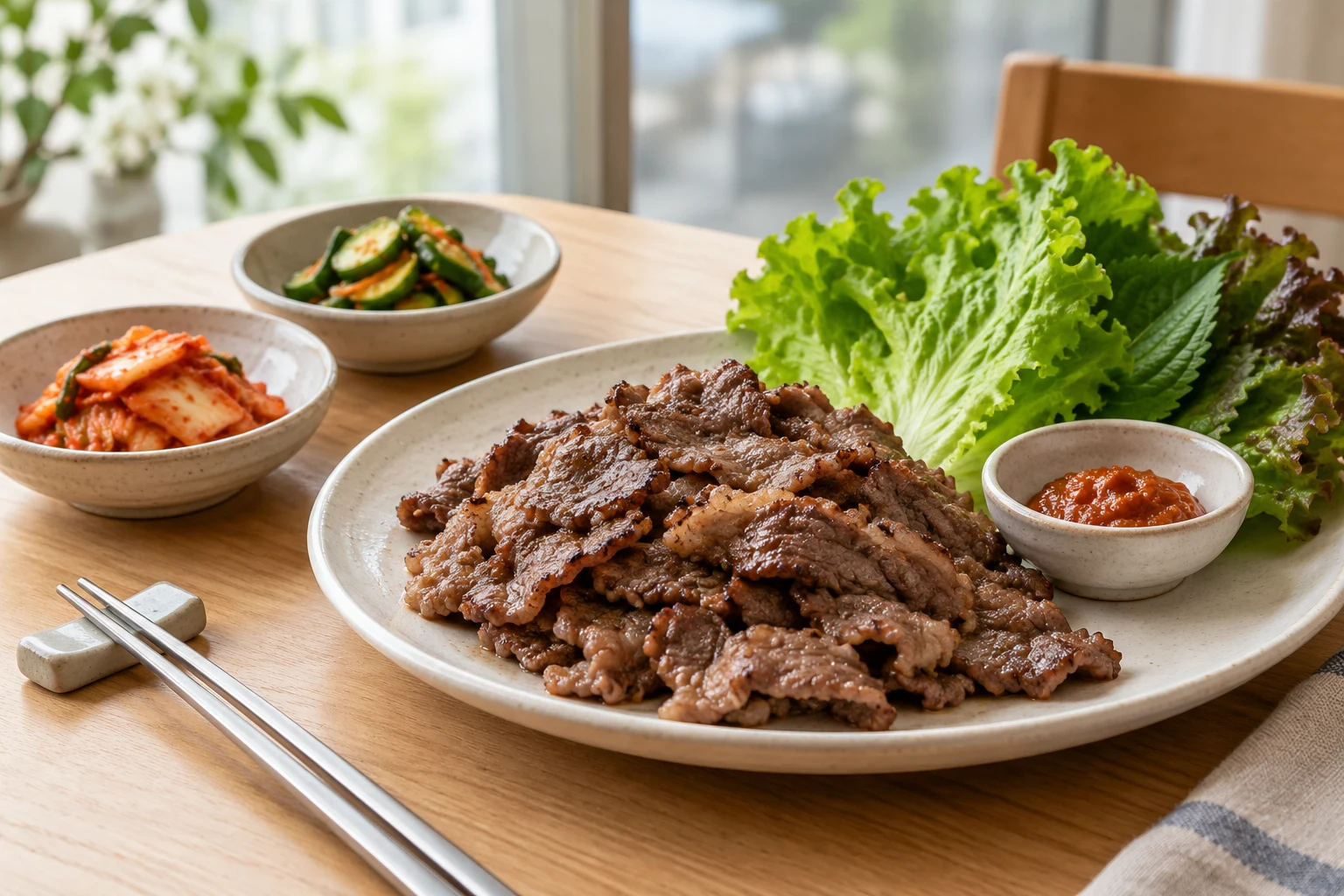
Korean barbecue at home works because the table, the food, and the heat are organised before cooking begins. Thin pieces cook quickly, sides and sauces create contrast, and guests can eat in small rounds rather than waiting for one large platter. A home setup does not need to imitate every restaurant detail. It needs a safe cooking surface, clear ventilation, prepared ingredients, and a serving rhythm that keeps raw and cooked food separate.
Choose the cooking surface
A tabletop grill, cast-iron pan, griddle, or outdoor grill can provide the cooking surface. Choose equipment approved for the setting and with enough ventilation. Never use a charcoal or gas grill indoors. A pan on a suitable cooktop may be the simplest home option, while an outdoor grill gives more smoke and space.
Keep the surface hot enough to brown thin meat without creating constant flames. Fat and marinade can drip or pool, so have a way to reduce heat or move food. A two-zone outdoor grill is useful; a pan may need smaller batches and draining between rounds. The equipment determines the workflow, not the other way around.
Prepare the table first
Slice meat into pieces that cook quickly and evenly. Prepare rice, lettuce or other wraps, sauces, pickles, vegetables, and side dishes before the first piece reaches the heat. Keep raw meat on a dedicated plate and use clean plates for cooked food. Do not place cooked pieces back onto the raw tray.
If a marinade is used, reserve a clean portion for serving before the raw meat is added. Used marinade is a raw-food contact material unless safely cooked. Arrange utensils so guests can reach cooked food without crossing the raw preparation area. The table should feel abundant because preparation is complete, not because every bowl was made at the last minute.
Cook in small rounds
Thin meat cooks quickly and can become dry when left waiting over heat. Add a manageable amount to the surface, allow it to brown, and turn when the underside releases. Crowding makes the food steam and lowers the surface temperature. Small batches create better browning and let the cook remove finished pieces promptly.
Use separate tools for raw and cooked food. If guests serve themselves, provide clear instructions and enough utensils. A shared grill needs attention because a piece can be browned outside while its centre remains undercooked. Use a thermometer for thicker pieces and follow current FoodSafety.gov and USDA FSIS guidance for the specific meat.
Balance the table
Rich grilled meat needs contrast. Rice, fresh leaves, pickled vegetables, fermented or spicy sides, and a clean dipping sauce each change the texture and intensity of a bite. Do not cook every side on the same surface. Many components can be prepared ahead and served cold or at room temperature, leaving the heat for food that benefits from it.
Sauce should be offered in a way that lets guests adjust. A sweet or thick sauce may burn on the grill, so add it at the table or near the end. Fresh herbs and crisp vegetables should be kept cool and replenished in small portions. Keep perishable items protected rather than leaving the full supply beside the hot surface.
Control smoke and heat
Indoor cooking requires appropriate ventilation, and outdoor cooking requires distance from structures and attention to wind. Fat dripping into a flame can create smoke and flare-ups. Move food away from direct heat, reduce the source, or use a pan designed to contain the fat. Never pour water onto burning grease.
If the surface is too hot, cook smaller batches or reduce the burner. If food is pale and wet, improve spacing and allow the surface to recover. If the meat dries out, check thickness, marinade time, batch size, and the moment it was removed. A table grill should support conversation, not force the cook to rescue a burning surface every minute.
Build a useful service rhythm
Begin with items that can tolerate a short hold, such as grilled onions or mushrooms, and cook delicate meat in smaller rounds. Put cooked food on a clean warm platter rather than leaving it on the hot surface. Ask one person to manage raw tongs and another to manage serving if the table is busy. This small division reduces accidental tool crossover.
Keep the table uncluttered. Place sauces and side dishes outside the path between the raw plate and the grill. If the cooking surface is a pan, drain excess fat carefully between batches according to the equipment instructions. If the surface is an outdoor grill, close the lid briefly to recover heat, then open it when turning or checking food. A predictable rhythm is safer than trying to cook every portion at once.
Finish and store safely
Serve cooked food in small rounds and keep raw food chilled until it is needed. Replace serving plates rather than topping a plate that has held raw meat. When the meal ends, cool and store leftovers according to current official guidance. The communal format does not change the need for safe temperature control and clean tools.
Record the cut, thickness, marinade, surface, batch size, and timing. Next time, change one factor. Korean barbecue at home becomes easier when the cook plans the table as carefully as the fire: prepared sides, thin even pieces, small batches, clear utensils, and a serving rhythm that keeps food moving safely.
If the table becomes crowded, pause the cooking and reset the plates. A short break is safer than allowing raw meat, cooked food, and shared tongs to overlap. The communal experience improves when everyone knows which utensils are for the hot surface and which are for eating.
Troubleshooting the next meal
If meat sticks, check whether the surface was fully heated and whether the piece was moved before the underside set. If smoke is excessive, reduce the amount of fat or marinade on the surface and cook in smaller batches. If guests are waiting, serve a prepared side or rice while the next round cooks rather than increasing the heat beyond control. If the table feels too rich, add a sharper pickle or fresh vegetable next time instead of adding another sauce.
The goal is not a perfect restaurant replica. The goal is a repeatable home routine in which the surface, ingredients, tools, and serving order make the meal easier to manage. Once that routine works, experiment with cuts, vegetables, and sauces one change at a time.
Sources
- FoodSafety.gov Safe Minimum Internal Temperatures: https://www.foodsafety.gov/food-safety-charts/safe-minimum-internal-temperatures
- USDA FSIS Safe Temperature Chart: https://www.fsis.usda.gov/food-safety/safe-food-handling-and-preparation/food-safety-basics/safe-temperature-chart
- CDC Preventing Food Poisoning: https://www.cdc.gov/food-safety/prevention/index.html