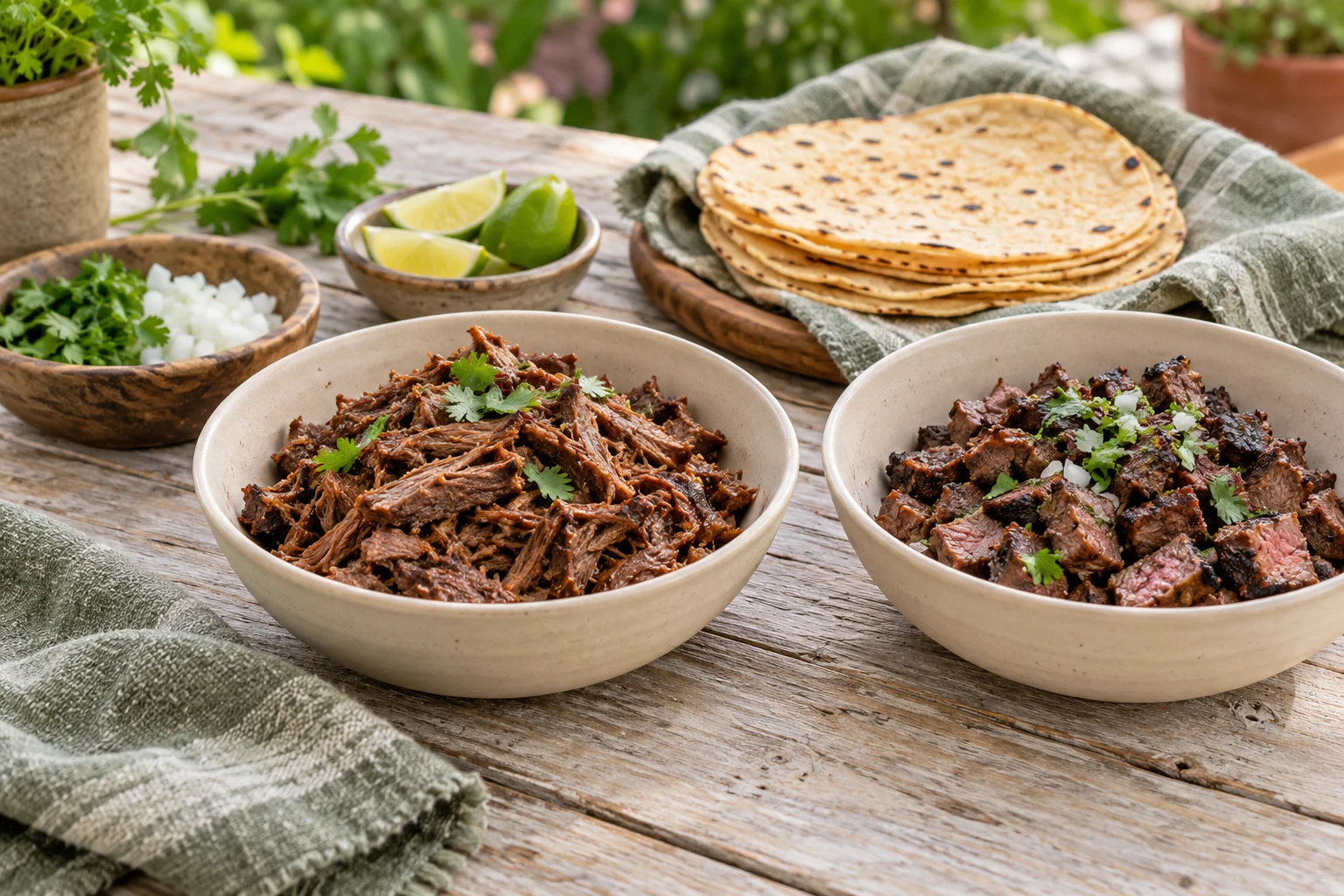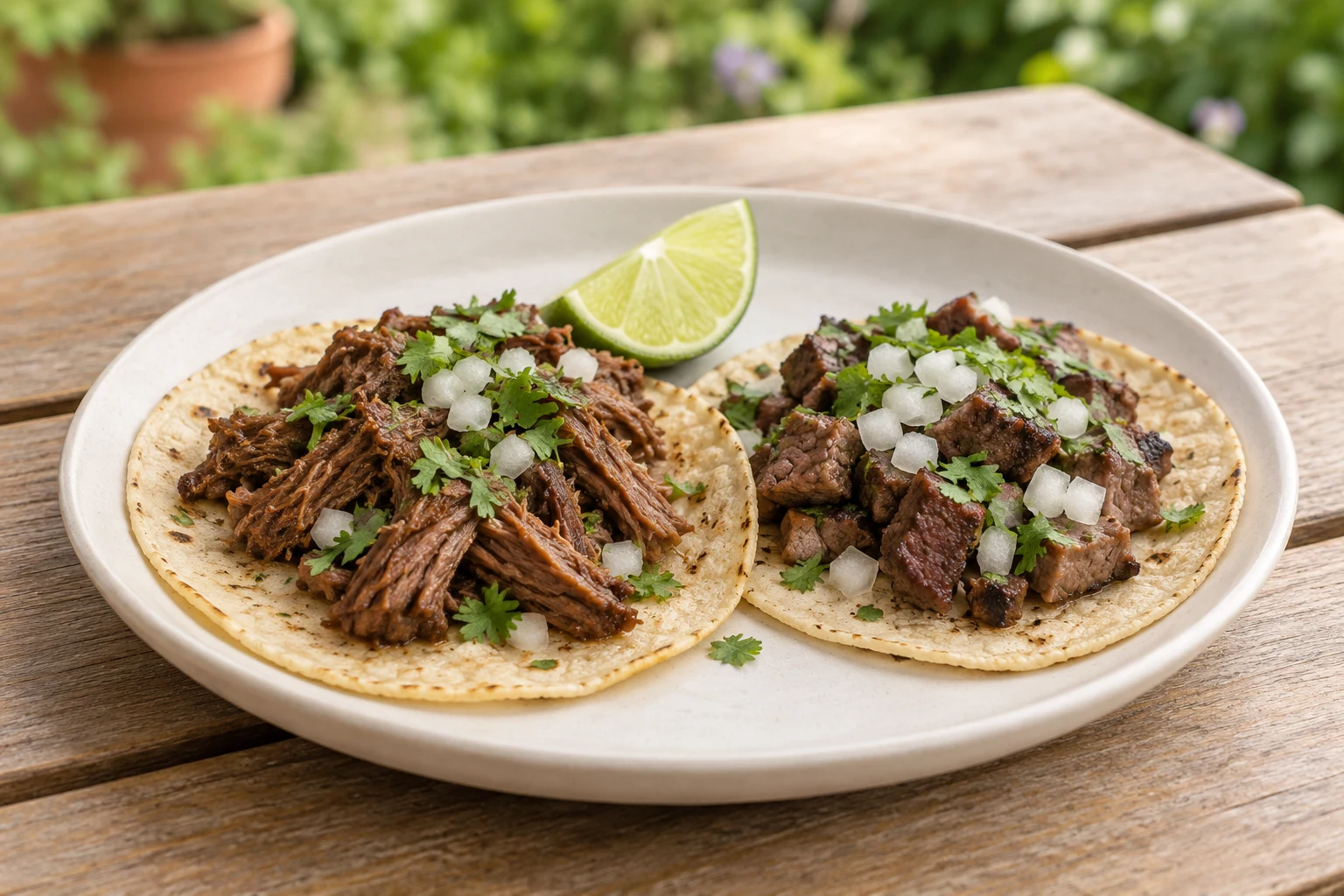
Barbacoa and carne asada are often placed together because both are associated with Mexican barbecue, but they describe different cooking ideas. Carne asada is generally a hot, fast preparation of seasoned meat. Barbacoa is associated with slower cooking and tender texture, often using cuts that need time. A home cook can learn from both without pretending that a backyard grill reproduces every regional ingredient, tool, or tradition.
Start with the cut and time
Carne asada works best when the cut, thickness, and heat support quick cooking. Thin or moderately thick beef can be seasoned, grilled over strong direct heat, and sliced across the grain. A cut that needs hours to soften should not be forced into a fast steak method. The first decision is whether the food needs browning quickly or time to become tender.
Barbacoa-inspired cooking needs a moist, protected environment and patience. A covered grill, Dutch oven, or other controlled setup can adapt the principle, but the equipment must be described honestly. The texture comes from time, moisture, and heat management, not from a label placed on a fast cook.
Build flavour in layers
Carne asada can use salt, citrus, chiles, aromatics, and herbs, but the marinade should support the surface rather than make it wet and difficult to brown. Pat the meat dry before it reaches the grate. Excess liquid drips into the fire, creates flare-ups, and delays crust formation. Reserve a clean portion of marinade for serving; never reuse raw-meat contact liquid without safe handling and cooking.
For a slow barbacoa-style preparation, seasoning should survive a long cook without becoming bitter. Add delicate fresh elements at serving if they would lose their character in the heat. A sauce, salsa, pickle, or herb finish can provide brightness after the meat is tender.
Use the right fire
Carne asada needs a hot direct zone and a clear path to a cooler area. The direct zone creates colour, while the cooler side protects the surface if fat or marinade causes a flare-up. Do not turn the meat repeatedly through flames. Move it away from the fire and let the heat settle.
For a slower adaptation, use indirect heat and a closed lid. The cooker should remain stable enough that the food can soften without the exterior burning. A grate-level thermometer helps reveal hot spots. If the surface is ahead of the centre, increase distance or add protection rather than increasing the fire.
Slice and serve with purpose
Carne asada is easier to eat when it is rested briefly and sliced against the grain. The grain may not run in one direction across the entire cut, so inspect before slicing. Serve with warm tortillas, beans, grilled vegetables, salsa, or another accompaniment that lets the meat remain the focus.
Barbacoa-style meat can be shredded or portioned after resting. Prepare the table before the long cook finishes so the meat is not rushed from the cooker to an unfinished meal. Serve in rounds when possible and keep cooked food on a clean platter.
Keep safety separate from tradition
Use a thermometer and current FoodSafety.gov or USDA FSIS guidance for the specific meat. Browning, smoke, and a traditional name do not prove a safe internal temperature. Keep raw meat chilled, separate raw and cooked utensils, and handle leftovers promptly. Outdoor fire requires clear space, attention to wind, and equipment used only in an appropriate open setting.
If the food is prepared for guests, explain what has been adapted. A home grill may use a different cut, fuel, or serving method. Honest description respects the original tradition and helps the reader understand which part of the technique they are actually learning.
Diagnose the result
If carne asada is tough, check cut thickness, slicing direction, and whether it was cooked past the intended point. If it is pale, improve drying, preheat, and direct contact. If it burns, reduce the marinade residue, move away from the hottest area, and control flare-ups. If a barbacoa-style cut is firm, allow more time at stable heat rather than increasing flame until the outside dries.
Record the cut, marinade time, fire layout, turning point, internal temperature, and rest. The note turns a broad cultural comparison into a useful next cook. The most valuable lesson is the relationship between cut, heat, time, and service.
Use that record to choose the next experiment. If a thin steak was tough, change the cut or slicing before adding more marinade. If a slow cut stayed firm, change the time and moisture rather than the direct flame. If the surface tasted muddy, reduce wet seasoning and let the fire provide clearer browning. Specific corrections preserve the identity of the food while improving the method.
Plan the meal around the cooking speed as well. Fast carne asada can be served soon after a short rest, while a slow barbacoa-style cut needs a buffer and a safe holding plan. Preparing tortillas, sides, and salsa before the meat reaches its finish prevents the cook from rushing a resting period or leaving ready food beside raw ingredients.
That timing difference is part of the lesson. A fast cook rewards preparation and a clear hot zone; a slow cook rewards patience, moisture control, and a protected finish. Choose the method that suits the cut instead of forcing every Mexican-inspired meal into the same grill pattern.
Sources
- FoodSafety.gov Safe Minimum Internal Temperatures: https://www.foodsafety.gov/food-safety-charts/safe-minimum-internal-temperatures
- USDA FSIS Safe Temperature Chart: https://www.fsis.usda.gov/food-safety/safe-food-handling-and-preparation/food-safety-basics/safe-temperature-chart
- FoodSafety.gov How to Grill Safely: https://www.foodsafety.gov/blog/how-grill-safely-summer