Lighting charcoal is the first fire-management task of a cook. The goal is not simply to make coals glow. It is to create a stable, outdoor cooking fire without using unsafe fuel, standing over a sudden flame, or placing food on charcoal that is still producing heavy fumes. A chimney starter, a clear work area, and patience make the process easier to control.
Set the location first
Place the grill outdoors on a stable, non-combustible surface with clear space around it. Keep it away from buildings, railings, dry vegetation, and anything that could catch a spark. Consider wind direction before lighting. Children, pets, and guests should have a clear boundary away from the fire and hot metal.
Inspect the grill, grate, vents, ash catcher, and lid. Remove excess ash when the grill is completely cold because ash can restrict airflow and retain heat. Empty or clean grease collection areas according to the equipment instructions. Have long-handled tools, heat-resistant gloves, and a safe place for the chimney ready before fuel is lit.
Use a controlled starter
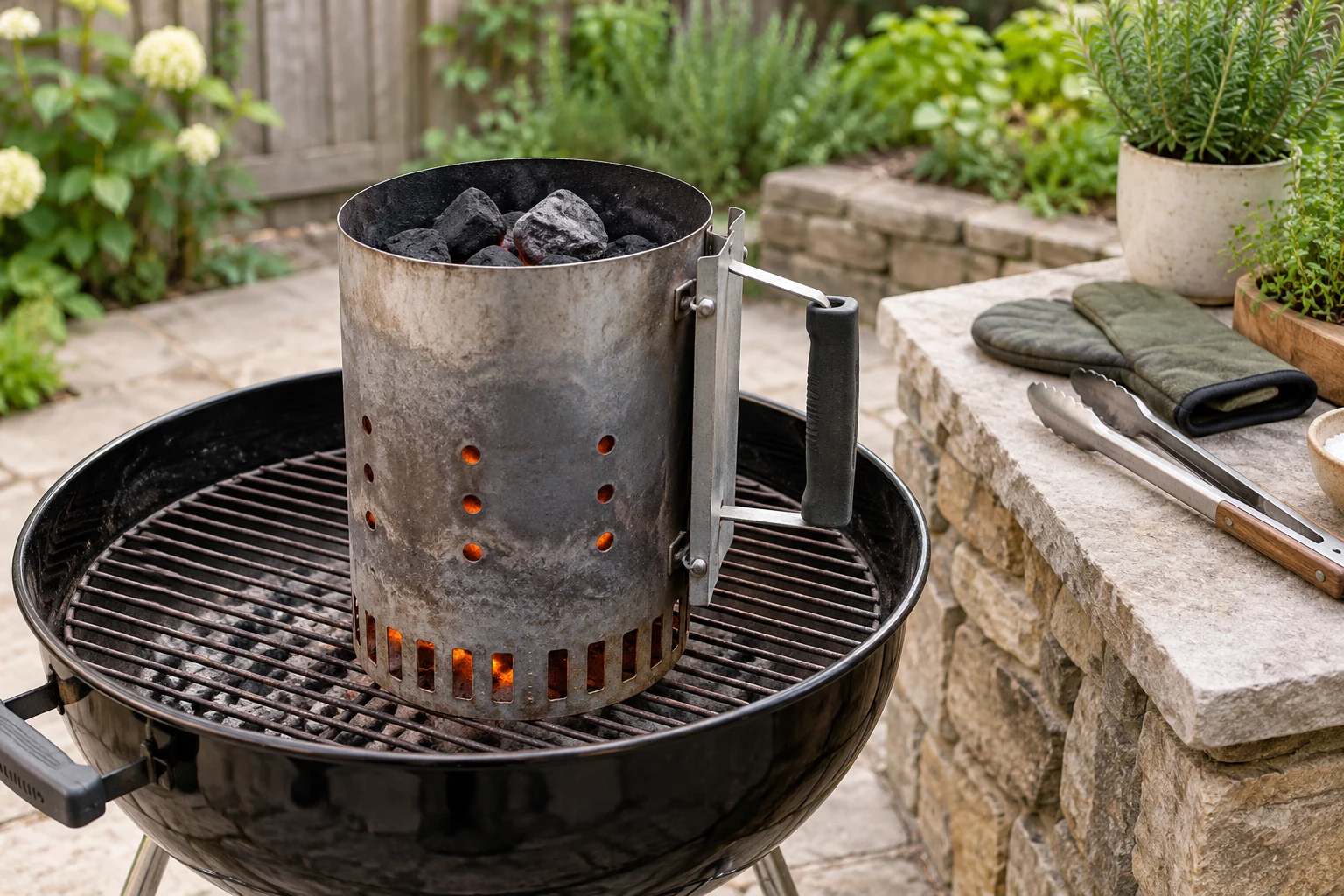
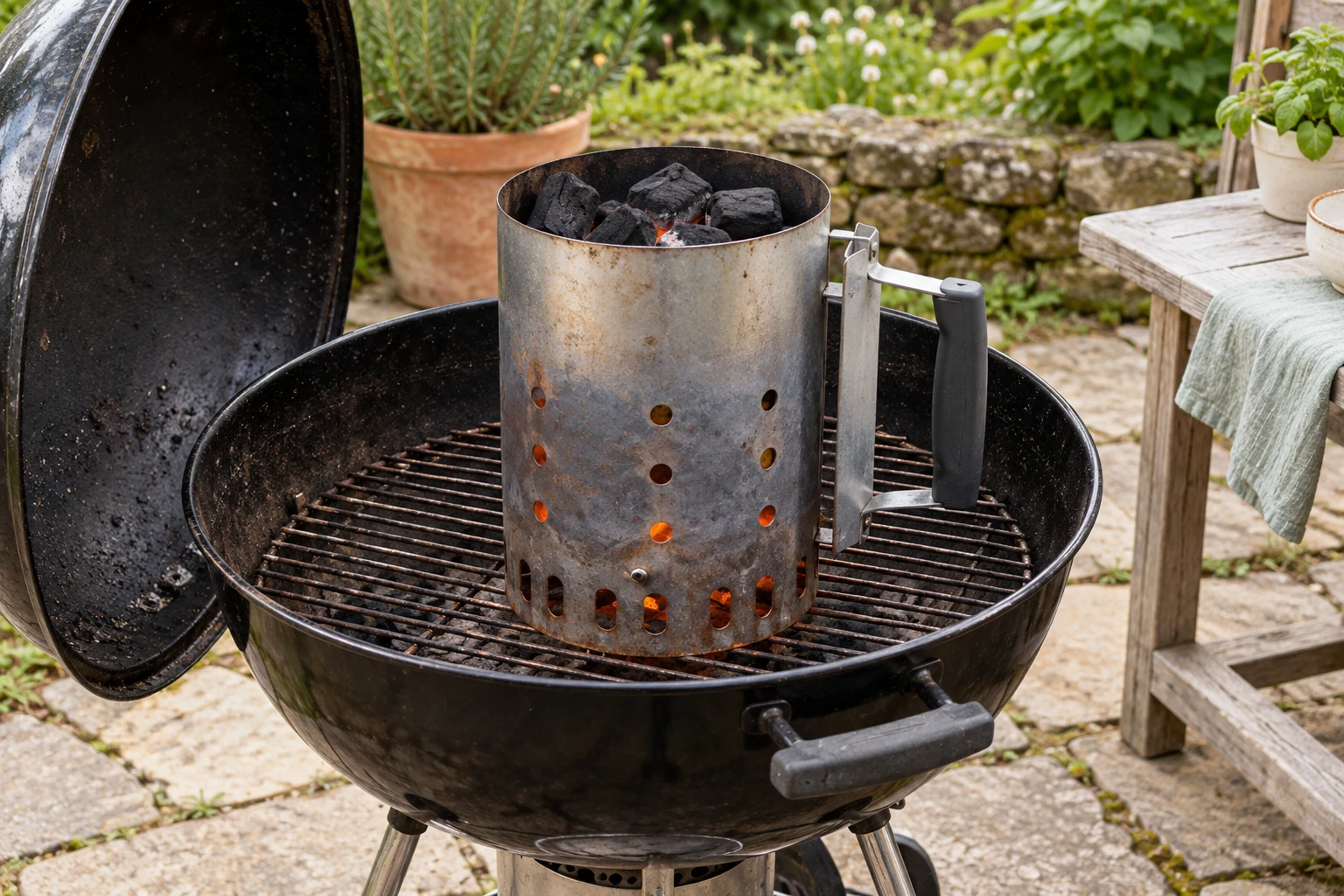
A chimney starter gives charcoal a defined column of heat. Fill it according to the tool's capacity, place an approved firelighter or starter material underneath, and light it from a safe position. Never use gasoline, kerosene, or another volatile liquid. Do not add starter fluid to hot or burning coals. Vapour can ignite suddenly and create a dangerous flash.
Stand to the side rather than leaning over the chimney. The metal becomes extremely hot, and the handle may not protect every part of the tool. Keep the chimney away from children and from surfaces that can scorch. Use the product instructions for the starter material and never improvise with household liquids.
Wait for the right stage
Charcoal is not ready simply because a few pieces are glowing. Wait until the coals have developed steady heat and the upper layer is beginning to ash, unless the recipe or fuel instructions specify another condition. Heavy smoke from starter material should have cleared before food is added. If the fire is uneven, allow more time or arrange the fuel after it is transferred.
Open the grill vents before transferring coals according to the cooker design. Airflow keeps the fire alive, but fully open vents can raise heat quickly. Use tongs or the chimney's intended pouring method, keep your hands and face away from the heat, and never carry a full chimney through a crowd.
Create zones before cooking
Bank the coals to one side for direct and indirect heat. A two-zone layout provides a place for food to finish away from the hottest fuel and gives the cook a response to flare-ups. Spread the coals only when the meal requires a broad direct area. Leave a clear edge for moving food and keep the lid able to close.
Let the grate preheat, then clean it with an appropriate tool. Lightly oil the food if needed rather than pouring oil onto the grate. Oil and fat can drip into the charcoal and create flames. The fire should be calm enough that the food can be placed deliberately instead of being rushed onto a surface that is still smoking heavily.
Manage the first cooking minutes
After food goes on, close the lid when the method needs chamber heat. Avoid opening it repeatedly because each opening feeds or releases air and changes the fire. If flames rise from dripping fat, move the food to the indirect side and close the lid when safe. Do not pour water onto a grease fire. Reduce fuel or airflow according to the grill instructions.
Keep raw meat tools and serving tools separate. Use a thermometer for the safety decision and follow current FoodSafety.gov or USDA FSIS guidance for the food. A clean-looking grate and a browned surface do not prove that poultry, ground meat, or fish has reached a safe temperature.
Handle the end of the cook
When cooking is finished, close the lid and vents according to the grill's instructions so the charcoal loses oxygen. Do not assume the coals are cold because the glow has disappeared. Ash and metal can remain hot for hours. Keep the grill protected from children and animals until it is completely cool.
Never move hot coals into a bin, onto soil near dry vegetation, or into a combustible container. Dispose of ash only when cold and according to local rules. If the grill will be used again, inspect the vents and ash catcher after everything is cool rather than disturbing the fire while it is active.
Learn from the fire
Record the amount and type of charcoal, the weather, the vent positions, the time to readiness, and the shape of the coal bed. If the fire was too hot, use less fuel or reduce airflow earlier. If it was weak, check ash, fuel quality, and vent position. A safe charcoal routine is repeatable because each step has a reason: clear the area, light controlled fuel, wait for clean heat, build zones, and shut down completely.
Keep a safe fallback for a delayed fire. Do not rush by adding volatile liquid or placing food over half-lit fuel. Move the meal schedule, use a prepared side, or wait for the coals to reach a clean cooking stage. A late barbecue can still be a good barbecue; a rushed ignition can create a preventable injury.
Sources
- NFPA Grilling Safety: https://www.nfpa.org/education-and-research/home-fire-safety/grilling
- NFPA Grilling Safety Tip Sheet: https://www.nfpa.org/downloadable-resources/safety-tip-sheets/grilling-safety-tip-sheet
- FoodSafety.gov How to Grill Safely: https://www.foodsafety.gov/blog/how-grill-safely-summer