Wood is a flavour ingredient and a combustion problem at the same time. The right amount can add aroma and colour; too much can make food bitter, and poorly burning wood can fill the cooker with harsh smoke. Start with the food and cooker, choose one wood, add a modest amount, and observe the result before trying to create more smoke.
Match wood to the food
Different woods have different aromas, but the most important distinction for a beginner is intensity. A mild wood can support fish, vegetables, and chicken without dominating them. A stronger wood may suit beef or pork when used carefully. Regional names and availability vary, so treat a wood description as a starting point rather than a guarantee.
Use food-safe cooking wood from a reliable source. Do not burn painted, treated, glued, mouldy, or unknown scrap wood. Avoid wood that has been exposed to chemicals or has an unfamiliar smell. The smoke enters the food; fuel choice is part of food quality.
Decide whether chips are necessary
A charcoal or wood fire may already provide enough smoke. Adding chips to a heavy-smoke fire can make the result harsh. Gas grills need a suitable smoke container or manufacturer-approved method, while pellet cookers use their own fuel system. Follow the equipment instructions rather than placing loose material where it can block burners or create an uncontrolled fire.
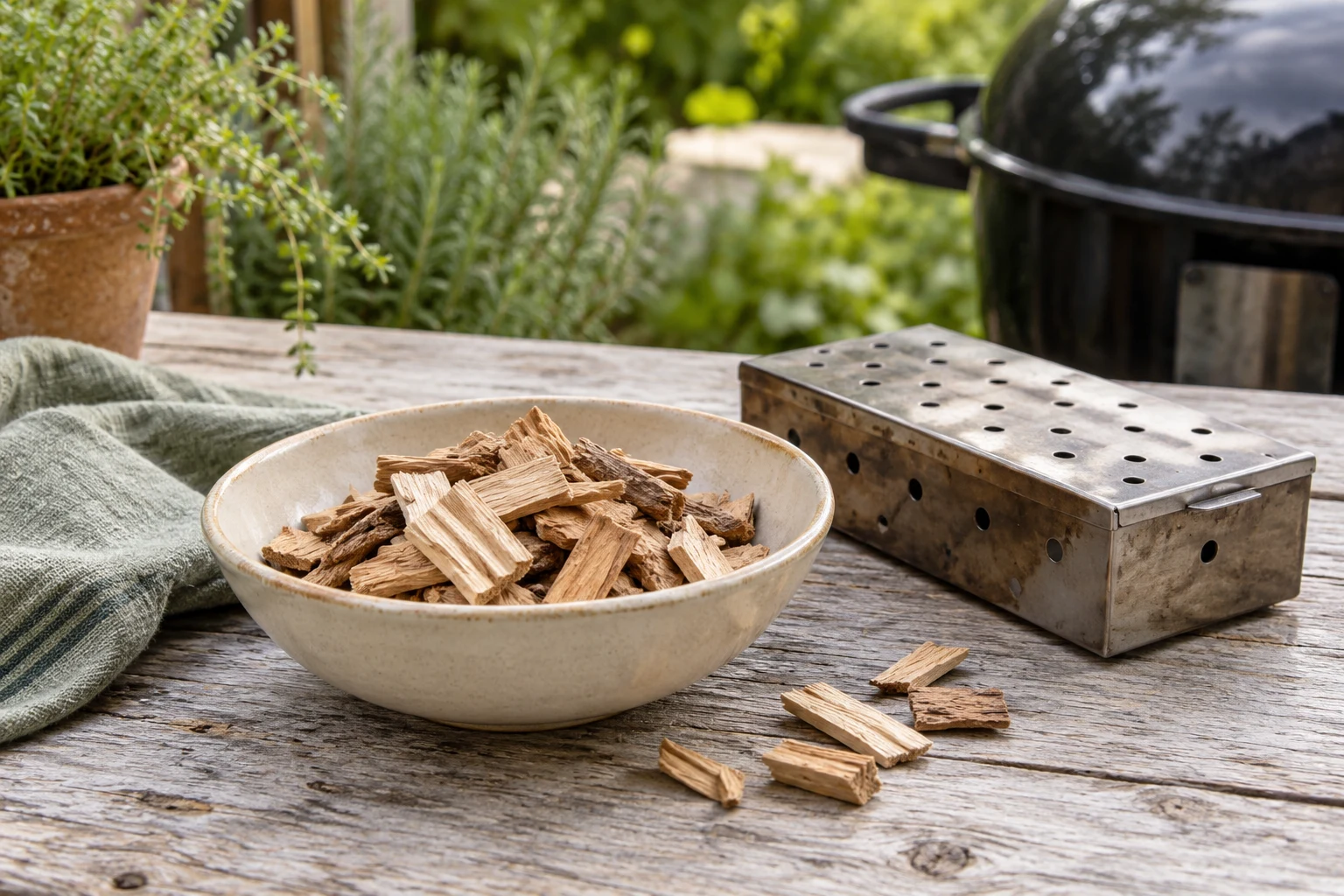
Chips burn more quickly than larger chunks. They can be useful for a shorter cook or for a small amount of smoke, but they need careful timing. Start with less than the maximum suggested by the tool and note the response. More smoke is not automatically more flavour.
Understand clean smoke
Thin, clean smoke is usually a better target than a large white cloud. Heavy white smoke often indicates incomplete combustion, damp wood, too little oxygen, or too much wood added at once. It can leave a bitter coating on the food. Allow the fuel to settle, provide the airflow the cooker requires, and wait before adding another load.
Soaking chips is not a universal solution. Wet chips can delay combustion, create steam, and produce a burst of smoke that is hard to control. Use the method designed for the cooker and the chips. The goal is a controlled release, not a dramatic cloud.
Add smoke when the food can use it
The surface of food accepts smoke differently as it dries and changes. Add smoke early enough for the food to develop character, but do not keep adding wood for the entire cook. Thin fish and vegetables may need only a short exposure. A large shoulder or brisket can take longer, but it can also become bitter if the smoke stays heavy.
Keep the lid closed after adding wood. Repeated opening releases heat and gives the fire more oxygen, creating a cycle of unstable temperature and excessive smoke. If the aroma is already strong, stop adding wood. The cook does not need to look smoky to be smoky.
Control wood in a grill
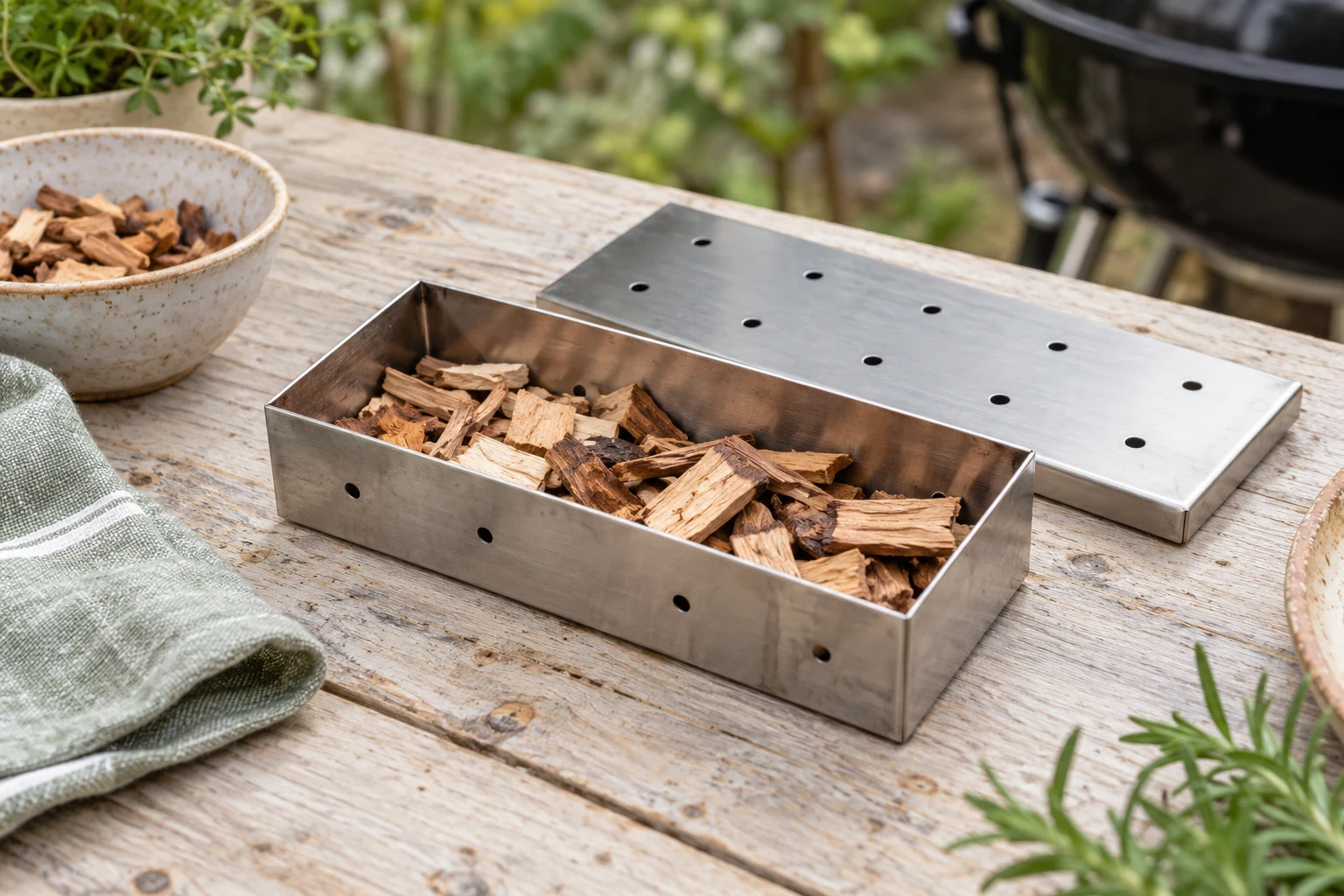
In a charcoal grill, place a small amount of wood where it can smoulder or burn cleanly without falling into a dangerous position. Keep a cooler zone available because fat drips can create flames. In a gas grill, use a purpose-built smoker box or foil method only when the equipment instructions permit it. In a smoker, manage the firebox and airflow rather than loading chips continuously.
Watch the food and the fire together. If the surface darkens quickly while the centre is late, reduce direct exposure and stop adding wood. If the flavour is pale but the cooker is stable, add a small amount and wait. Change one variable so you can learn whether the problem was smoke, heat, or food moisture.
Avoid unsafe fuel handling
Keep wood dry and stored away from children and ignition sources. Do not carry burning chips or open containers through a crowded cooking area. Use heat-resistant tools and follow the grill's shutdown instructions. Keep raw-food tools separate from fuel-handling tools when practical, and use a clean serving platter for cooked food.
Smoke does not replace safe internal temperature checks. Use a thermometer and follow current FoodSafety.gov and USDA FSIS guidance for the specific food. A dark smoke colour can make food look done before the centre is safe.
Build a flavour record
Record the wood, amount, cooker, food, heat range, and time of exposure. If the result is bitter, reduce the wood and improve combustion. If it is too faint, add a small amount earlier or choose a more suitable intensity. If the smoke is good but the food is dry, solve the heat or timing problem rather than adding more wood.
The best smoke flavour is controlled enough that the ingredient remains recognisable. Choose safe wood, use less than your first instinct suggests, keep the fire clean, and let the food tell you when the smoke has done enough.
If you are comparing woods, test them on the same food with the same cooker and exposure time. Changing the fuel, temperature, cut, and sauce together makes the result impossible to interpret. One controlled comparison will teach more than a large load of several woods that leaves the food bitter.
Remember that smoke is absorbed while the surface is receptive, not forever. Once the food has the aroma and colour you want, stop adding wood and concentrate on maintaining safe, steady heat. Continuing smoke simply because the cook is long can create a result that is darker without being better.
Sources
- FoodSafety.gov How to Grill Safely: https://www.foodsafety.gov/blog/how-grill-safely-summer
- FoodSafety.gov Safe Minimum Internal Temperatures: https://www.foodsafety.gov/food-safety-charts/safe-minimum-internal-temperatures
- NFPA Grilling Safety: https://www.nfpa.org/education-and-research/home-fire-safety/grilling