A first backyard barbecue becomes stressful when every dish competes for the same fire at the same time. A better menu gives each component a job: one main that can be monitored, one or two sides that can be prepared early, one fresh element for contrast, and a simple finish. The menu should reduce decisions during the cook, not create a restaurant-sized project in a backyard.
Choose the main before the sides
Start with the food that defines the meal. A first cook might use chicken pieces, burgers, sausages, fish, or vegetables rather than several cuts that all need different heat. Choose a main that matches the grill size, the number of guests, and the time available. If the main needs indirect cooking, let the sides use the table or a cooler zone instead of asking the grill to do everything.
Decide how doneness will be checked before lighting the fire. A thermometer is essential when safety depends on internal temperature. Colour and grill marks help with observation but do not prove that poultry or ground meat is safe. Keep a clean serving platter ready so finished food never returns to a tray that held raw meat.
Build a menu with different textures
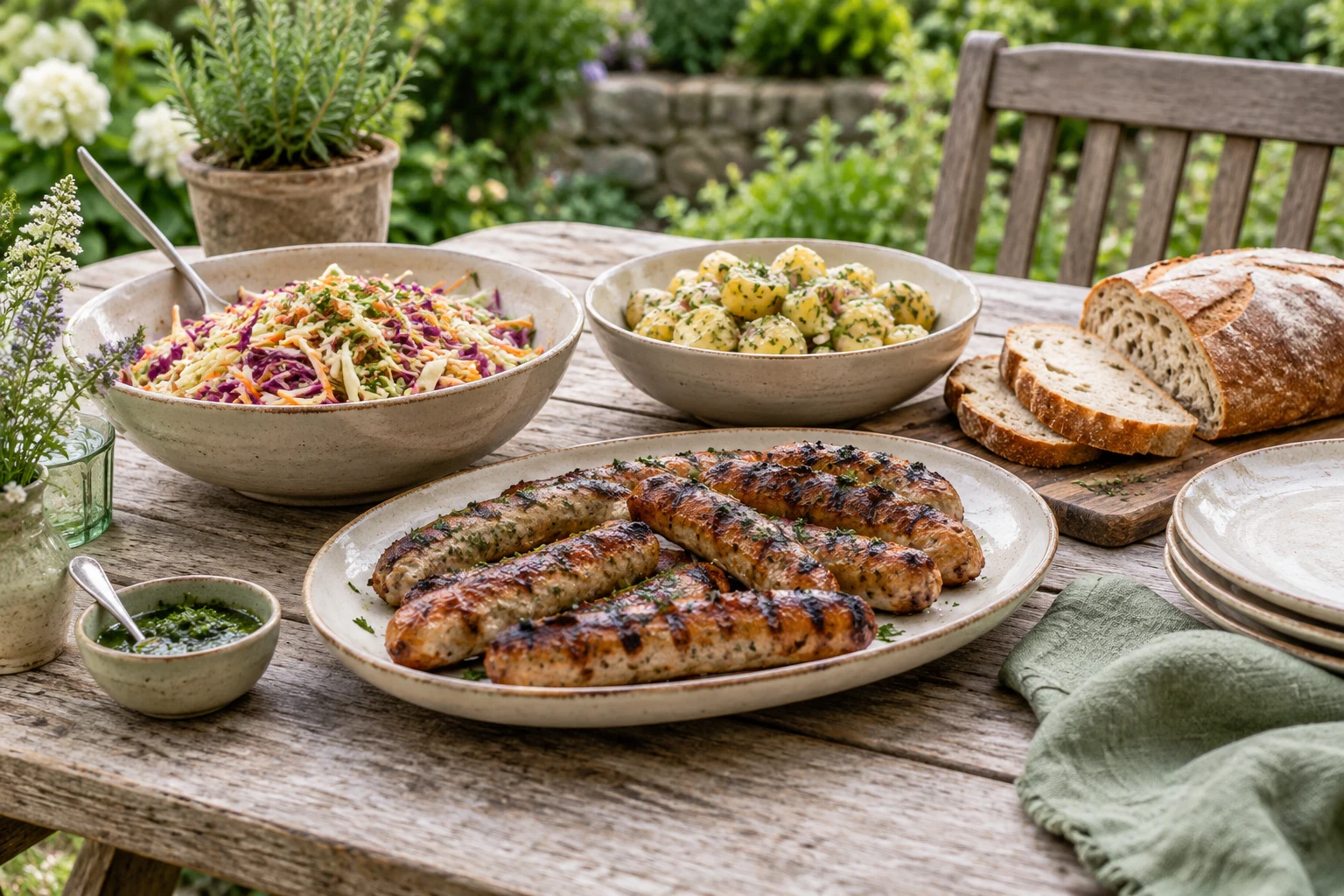
A balanced menu does not need many recipes. Pair a smoky or rich main with something crisp, acidic, fresh, or lightly dressed. Add one filling side such as bread, potatoes, beans, rice, or corn, then choose a sauce or condiment that can be served separately. This gives guests options without forcing the cook to manage five hot pans.
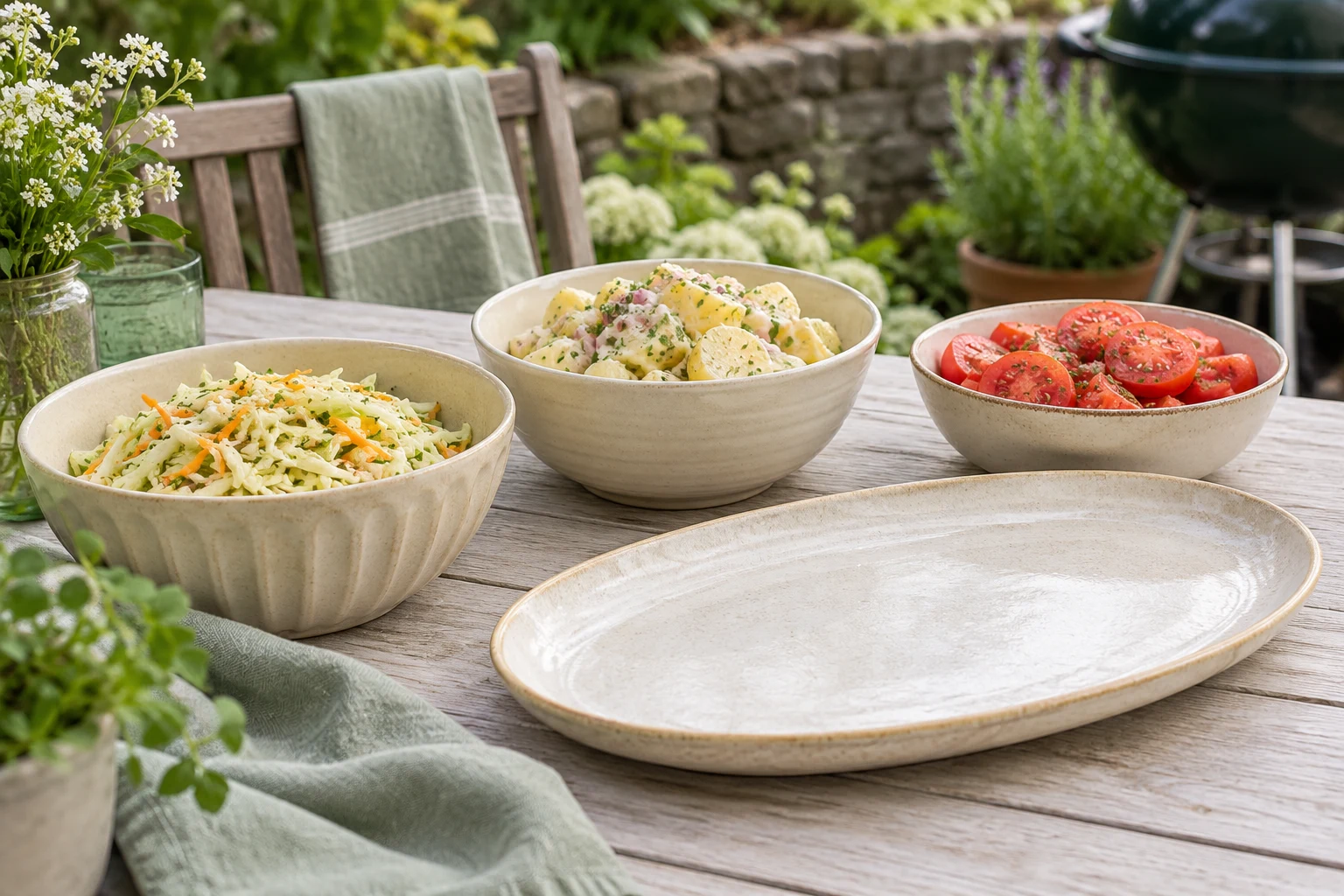
Make at least one side ahead. A slaw, bean salad, chopped vegetable dish, or chilled grain salad can be finished before the grill is hot. Keep perishable foods cold and return them to refrigeration or a properly iced container according to current food-safety guidance. Do not leave a cold side in the sun while the main is still cooking.
Write a simple schedule
Work backward from serving time. Count the time needed to prepare ingredients, preheat, cook the main, rest it if needed, and set the table. Add a buffer for weather and a fire that takes longer than expected. Long-cooked food should be started before quick foods, while sides that wilt or lose texture should wait until near serving.
Prepare sauces, garnishes, serving utensils, and drinks before the main goes on. Label or separate raw-food tools. Put the clean platter where it can be reached without crossing the hot zone. If children or guests will be nearby, define the grill boundary before cooking begins.
Use the fire in zones
An even layer of heat is simple but limiting. A two-zone grill gives a direct area for browning and a cooler area for finishing, holding, or escaping flare-ups. On a gas grill, leave a burner off. On charcoal, bank coals to one side. The food should have somewhere to go when the surface browns before the centre is ready.
Preheat and clean the grate before food arrives. Place thicker items over indirect heat and quick items over direct heat. Do not crowd the grate; crowded food steams, turns awkwardly, and makes it harder to control flare-ups. If the menu cannot fit comfortably, reduce the menu before adding more fuel.
Put safety into the workflow
Food safety is easier when it is designed into the menu. Use separate cutting boards or clean them between raw and ready-to-eat foods. Keep raw proteins chilled until preparation. Wash hands after handling raw meat, and use clean utensils for cooked food. Use a thermometer at the thickest point and follow current official guidance for each food.
Outdoor cooking also has fire risks. Use the grill only outdoors, keep it away from structures and combustible materials, and keep children and pets out of the working area. Never solve a grease flare-up by pouring water onto it. Close the lid and reduce or remove the heat according to the grill and fuel instructions.
Keep the cooking load calm
The main should be the only item that demands constant attention. If burgers, chicken, vegetables, and bread all need turning at once, the cook will lose track of timing. Cook in waves: finish the food that needs the most time, move it to a safe resting area, then use the cleanest part of the grate for the next wave. A tray or cooler zone can hold food briefly, but it should not become a place where raw and cooked items are mixed.
Avoid adding a last-minute complicated recipe because the table looks empty. A warm bread, sliced fruit, jarred pickle, or simple sauce can complete a meal without changing the fire plan. The best beginner menu leaves enough attention for learning how the grill behaves.
Serve with clear labels and portions
Serve the main in a way that makes doneness and ingredients clear. Keep sauces on the side when guests have different preferences. Slice or portion only after the food has had the rest it needs. Refresh sides in small bowls rather than placing the entire supply in the heat.
If leftovers remain, move them into shallow containers and follow current official guidance for cooling and storage. Do not leave food at outdoor room temperature for the entire afternoon. The meal is not finished when the grill turns off; safe handling continues through serving, cooling, and storage.
Review the menu after the meal
Write down what created work and what guests actually used. Note the main's size, the fire zones, the order of cooking, and the moment each side was ready. Next time, keep the strongest combination and remove one unnecessary component. A dependable backyard menu is not the longest menu. It is the one that lets the cook control heat, protect food, and enjoy the people around the table.
Sources
- CDC Preventing Food Poisoning: https://www.cdc.gov/food-safety/prevention/index.html
- USDA FSIS Leftovers and Food Safety: https://www.fsis.usda.gov/food-safety/safe-food-handling-and-preparation/food-safety-basics/leftovers-and-food-safety
- FoodSafety.gov How to Grill Safely: https://www.foodsafety.gov/blog/how-grill-safely-summer