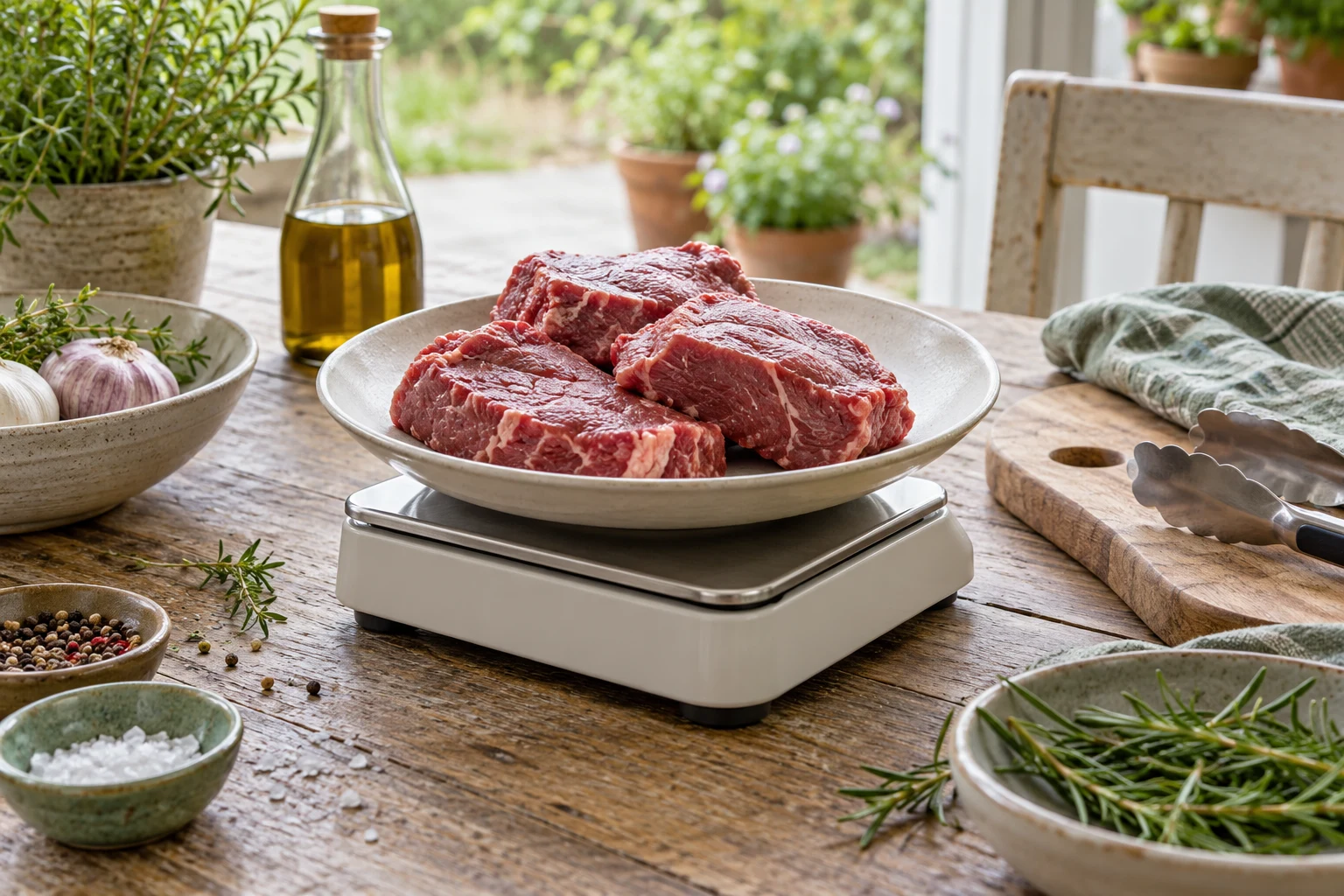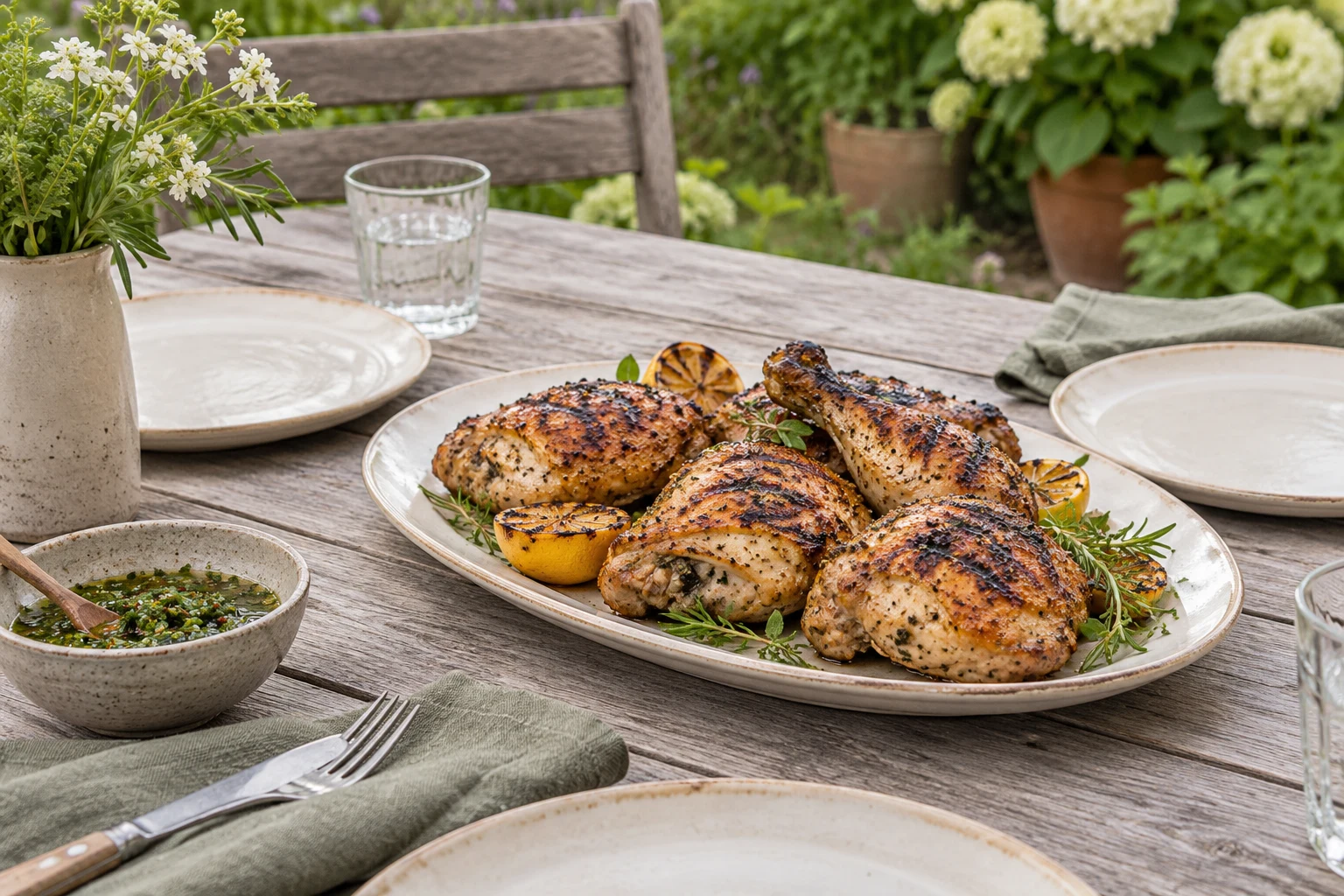
Buying meat for a barbecue is a planning problem, not a test of generosity. Too little food creates pressure during the cook; too much creates waste, storage problems, and a menu that is harder to control. A useful estimate begins with the number of people who will eat, the amount of edible food after cooking, the role of sides, and whether the main is served as a portion or as part of a wider table.
Count eaters and the menu
Start with people rather than pounds. Separate adults and children only if their portions will be meaningfully different. Note guests who do not eat the main protein, then decide whether they will have a substantial alternative or share the sides. A meal with bread, beans, potatoes, salads, and vegetables needs less meat per person than a meal where meat is the only centrepiece.
Consider the occasion. A long afternoon with snacks has a different demand from a short seated meal. If food will be served in waves, the first round may satisfy people before the main arrives. If the barbecue is the only meal, prepare a clearer buffer. The buffer should be modest; buying far more than can be safely stored is not a responsible backup plan.
Account for yield
Raw weight is not the same as food on the plate. Bone, trimming, fat, moisture loss, and cooking shrinkage all reduce the amount available to serve. A boneless, quickly grilled cut has a different yield from ribs, wings, brisket, or pork shoulder. Use the cut's typical yield as an estimate, then adjust for the amount of edible meat and the role of sides.
Bone-in foods look abundant in the package but include weight that will not be eaten. Large smoked cuts lose water and may need trimming before serving. Thin steaks and burgers have less structural loss but can still shrink. Do not compare package weights across cuts as though they represented the same number of portions.
Choose a portion method
For burgers, count patties and add a small contingency for seconds rather than buying an abstract raw weight. For chicken pieces, count pieces by guest and include a few extra only when children or appetites are uncertain. For ribs, plan by rack size and meatiness, not just the number of bones. For brisket or pulled pork, estimate the final cooked amount after trimming and shrinkage, then divide it across the intended servings.
If several meats are offered, do not calculate each as a full main portion. Decide whether guests will take a tasting portion of each or choose one. A mixed menu can use less of every individual meat, but only if the sides and serving order make that clear. Label unfamiliar foods and keep a vegetarian or non-pork alternative separate when needed.
Plan around the cooker
The grill capacity is a physical limit. A quantity estimate is not useful if the food cannot fit with air circulation and safe zone movement. Cook in waves when necessary and build resting time into the schedule. A large batch of burgers may need several rounds; a whole brisket may occupy the cooker by itself.
Choose foods with compatible heat needs. If one item needs low indirect heat for hours and another needs a quick sear, let the long item lead and use the direct zone later. Sides that can be prepared ahead reduce the pressure on the grate. A smaller, controlled menu is better than a large purchase that forces every item over the hottest area.
Include cooking risk and leftovers
A little contingency is sensible when meat may stick, burn, or lose more weight than expected. The contingency should be based on the risk of the cut and the reliability of the cooker, not on fear. A first brisket attempt may need more schedule flexibility than a batch of sausages. A windy day may extend cooking, but it does not mean buying double the meat.
Plan leftovers before buying. Cooked food must be cooled and stored according to current food-safety guidance. A large amount of leftovers is not a success if it sits outdoors for hours or cannot be refrigerated promptly. Provide shallow containers, a clean serving area, and enough refrigerator space before the fire is lit.
Use a serving strategy
Serve the main in waves when it benefits from being hot. Slice large cuts after resting and serve a reasonable first portion, then offer more. This prevents the whole supply from drying on a platter and gives the cook time to assess what remains. Keep raw and cooked utensils separate and use a clean board for carving.
Sides help control portions when they are substantial and ready on time. A grain, potato, bean, or vegetable dish gives guests something filling without making the meat feel scarce. Fresh, acidic elements can balance rich food and make a smaller portion feel complete. Sauce should support the main, not compensate for a quantity mistake.
Improve the estimate next time
Record the guest count, cuts purchased, raw weights, cooked yield, leftovers, and what disappeared first. Note whether the meal had snacks, bread, and sides. On the next event, change one assumption rather than applying a universal number. Children, appetites, cultural serving customs, and the structure of the menu all change the estimate.
The best quantity plan is transparent. It says what the main is, what the sides do, how much the cut will yield, how the cooker will handle it, and how leftovers will be stored. That plan gives the cook enough food without turning the barbecue into a storage problem.
Sources
- USDA FSIS Leftovers and Food Safety: https://www.fsis.usda.gov/food-safety/safe-food-handling-and-preparation/food-safety-basics/leftovers-and-food-safety
- CDC Preventing Food Poisoning: https://www.cdc.gov/food-safety/prevention/index.html
- FoodSafety.gov How to Grill Safely: https://www.foodsafety.gov/blog/how-grill-safely-summer