Outdoor cooking adds heat, weather, distance from the kitchen, and more people around the food. A safe cookout is therefore a workflow rather than one temperature number. Keep food cold before cooking, separate raw and ready-to-eat items, use a thermometer, protect serving dishes, and plan how leftovers will be cooled. These steps are simple when arranged before the grill is lit.
Build a safe work area
Place the grill outdoors on stable ground and keep it away from structures and combustible materials. Define the hot zone so children, pets, and guests do not reach across the fire. Put the raw-food preparation area away from the clean serving area. Have separate boards, trays, utensils, and platters ready before handling meat.
Keep a hand-washing or cleaning plan available. If water is limited, prepare supplies before the event rather than relying on a quick rinse. Wash hands after touching raw meat, packaging, or used marinades. Clean tools before they return to cooked food. A tidy layout prevents the cook from carrying raw-food contamination across the table.
Keep food cold before cooking
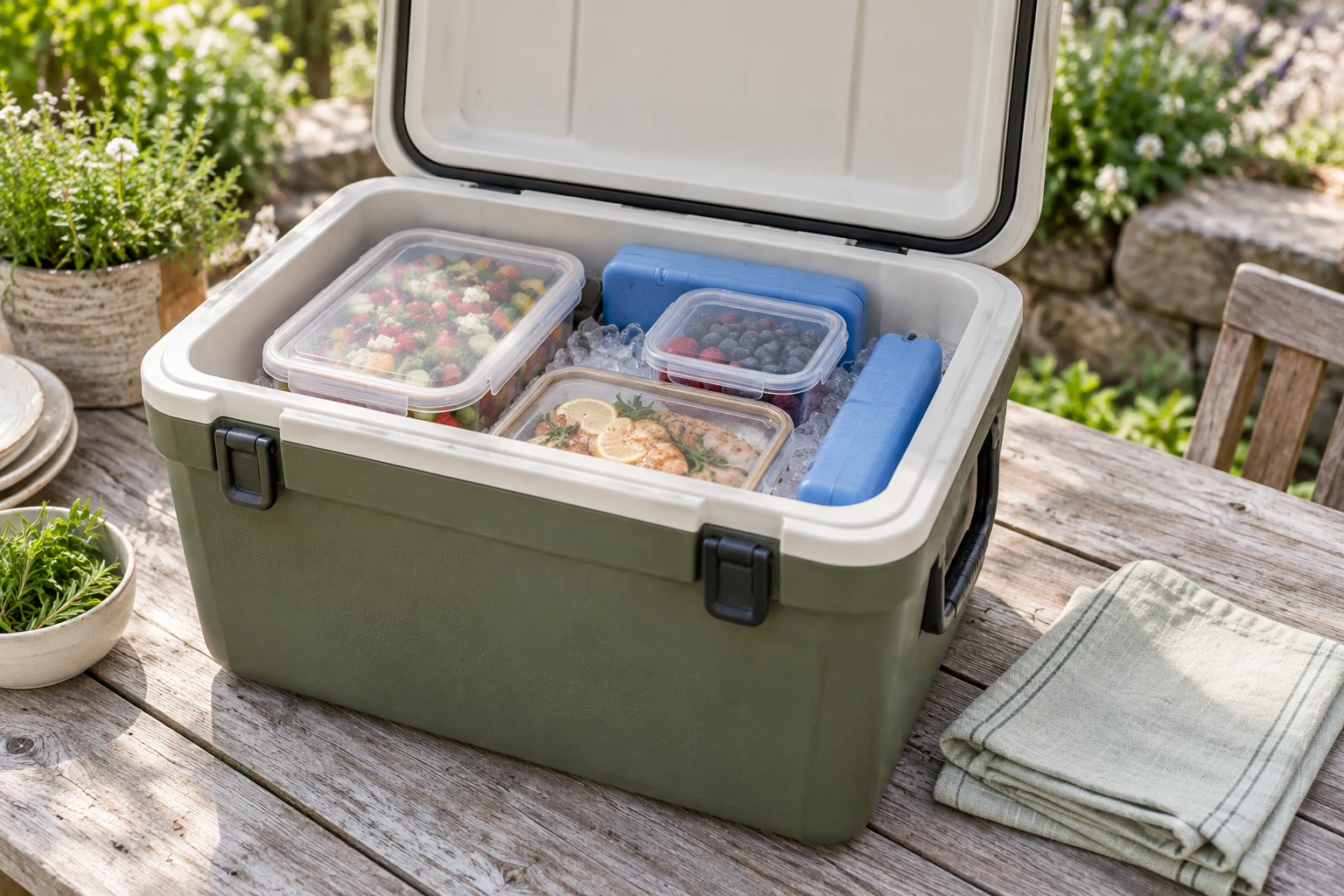
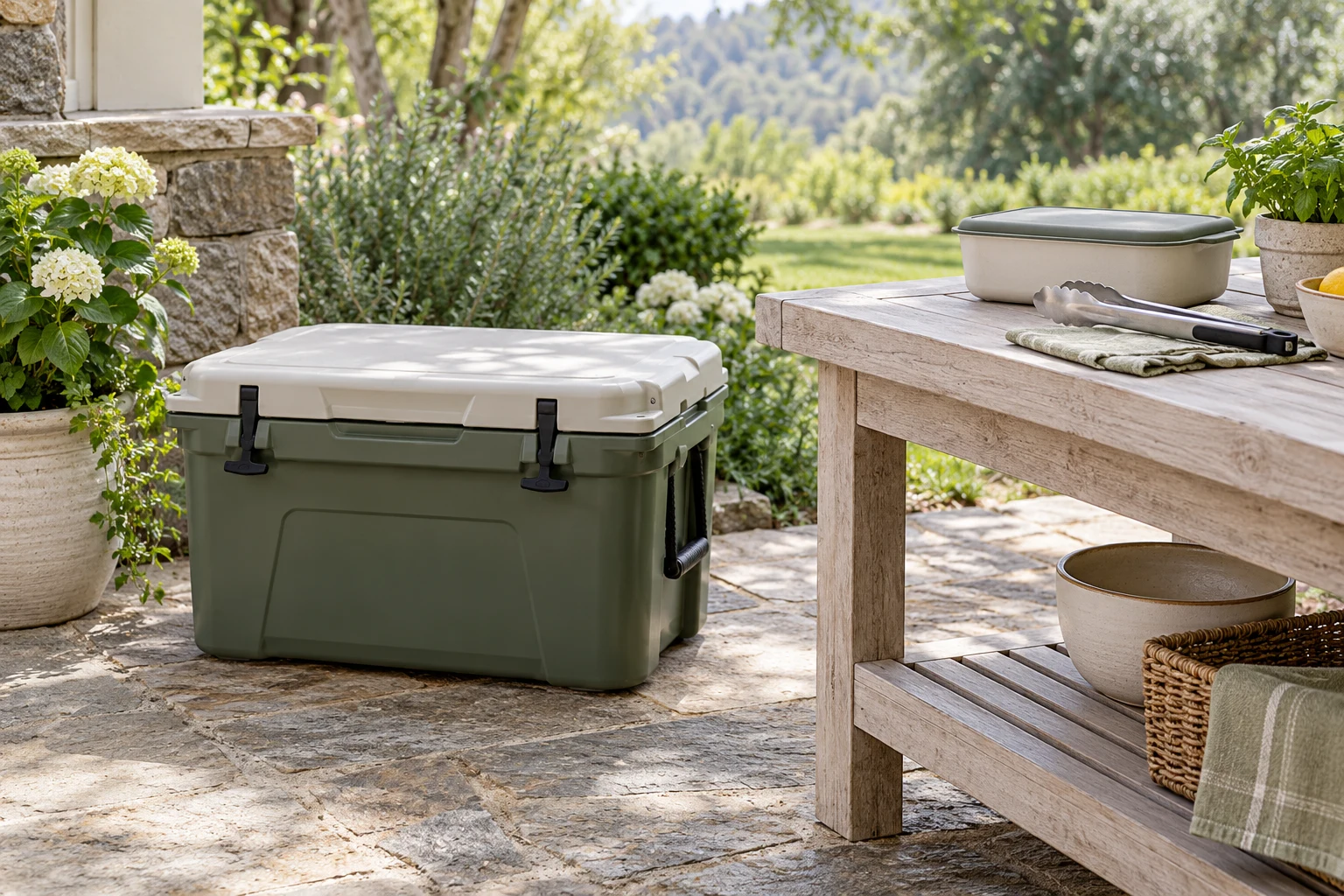
Bring perishable food out of refrigeration only when it is ready to be prepared. Use a cooler or insulated container with enough cold packs for the weather and the length of the gathering. Keep the lid closed as much as possible. A cooler used for drinks can warm quickly, so a separate food cooler is often easier to manage.
Separate raw meat from ready-to-eat foods and keep sealed packages from leaking onto ice, fruit, sauces, or drinks. Put raw poultry and ground meat in leak-resistant containers. Do not use the same cooler space carelessly for raw and cooked food if the packaging can open or drip.
Cook with a thermometer
Preheat and clean the grill, then create direct and indirect zones. Thick food may need time away from the hottest area, while quick food can brown over direct heat. Use a food thermometer at the thickest point and follow current FoodSafety.gov and USDA FSIS guidance for the specific food. Do not use grill marks, colour, or clear juices as the only safety test.
Check different pieces when thickness varies. Insert the probe from the side when that gives a better reading, and avoid touching bone or the grate. If one piece is ready early, remove it to a clean platter and continue the rest. Never return cooked food to the tray that held raw meat.
Manage flare-ups and fire
Fat, oil, and sugary sauces can create flames. Keep a cooler zone available and move food away from direct heat when a flare-up starts. Close the lid and reduce or shut off fuel according to the grill instructions. Never pour water onto burning grease. If the fire cannot be controlled safely, step away and follow local emergency guidance.
Apply sweet sauces late because they can burn before the centre reaches a safe temperature. Do not press fatty food repeatedly over the flame. Excess dripping creates smoke and flame without making the food safer. A clean grate and moderate oiling reduce avoidable flare-ups.
Protect the serving table
Use clean platters and serving utensils. Replenish food in small batches instead of leaving the entire supply in sun or beside the grill. Keep cold foods chilled and protect hot foods from contamination. Label sauces and separate utensils for dishes with different ingredients or dietary needs.
Guests should not use a raw-meat utensil to serve cooked food. If the gathering is busy, assign one person to watch the table while the cook manages the fire. This small division prevents the common problem of a safe cook becoming unsafe during serving.
Handle leftovers deliberately
Plan storage before shopping. Have shallow containers, refrigerator space, and clean tools ready. Follow current official guidance for cooling and storing leftovers. Do not leave cooked meat, creamy salads, or other perishables outdoors for the entire afternoon. When in doubt about time or temperature, do not serve food that has been held unsafely.
Keep leftover containers labelled if several foods were served. Reheat and serve only what will be eaten, leaving the rest protected. A barbecue is not finished when the grill is off; cooling, storage, and later reheating are part of the food-safety plan.
Review the workflow
After the cookout, note where raw and cooked tools were placed, whether the cooler stayed cold, how often the platter was replenished, and whether the fire caused interruptions. Improve the layout before changing recipes. Safety is most reliable when it is built into the route food takes from cooler to preparation, grill, clean platter, and storage.
Use a simple route check before serving: cold food is still cold, the raw tray is away from the table, the thermometer is clean, the platter is clean, and cooked food has not been left beside the fire. If one part of the route fails, pause and correct it before adding another dish. This small pause is easier than trying to reconstruct which utensil touched which food later.
The same check applies when food is served in waves. Replace a platter instead of mixing a new batch with food that has been sitting outside, wash or change the serving utensil, and keep the next portion protected until it is needed. Small batches reduce both waste and the amount of time any one dish spends in uncertain conditions.
Sources
- FoodSafety.gov Safe Minimum Internal Temperatures: https://www.foodsafety.gov/food-safety-charts/safe-minimum-internal-temperatures
- CDC Preventing Food Poisoning: https://www.cdc.gov/food-safety/prevention/index.html
- USDA FSIS Leftovers and Food Safety: https://www.fsis.usda.gov/food-safety/safe-food-handling-and-preparation/food-safety-basics/leftovers-and-food-safety