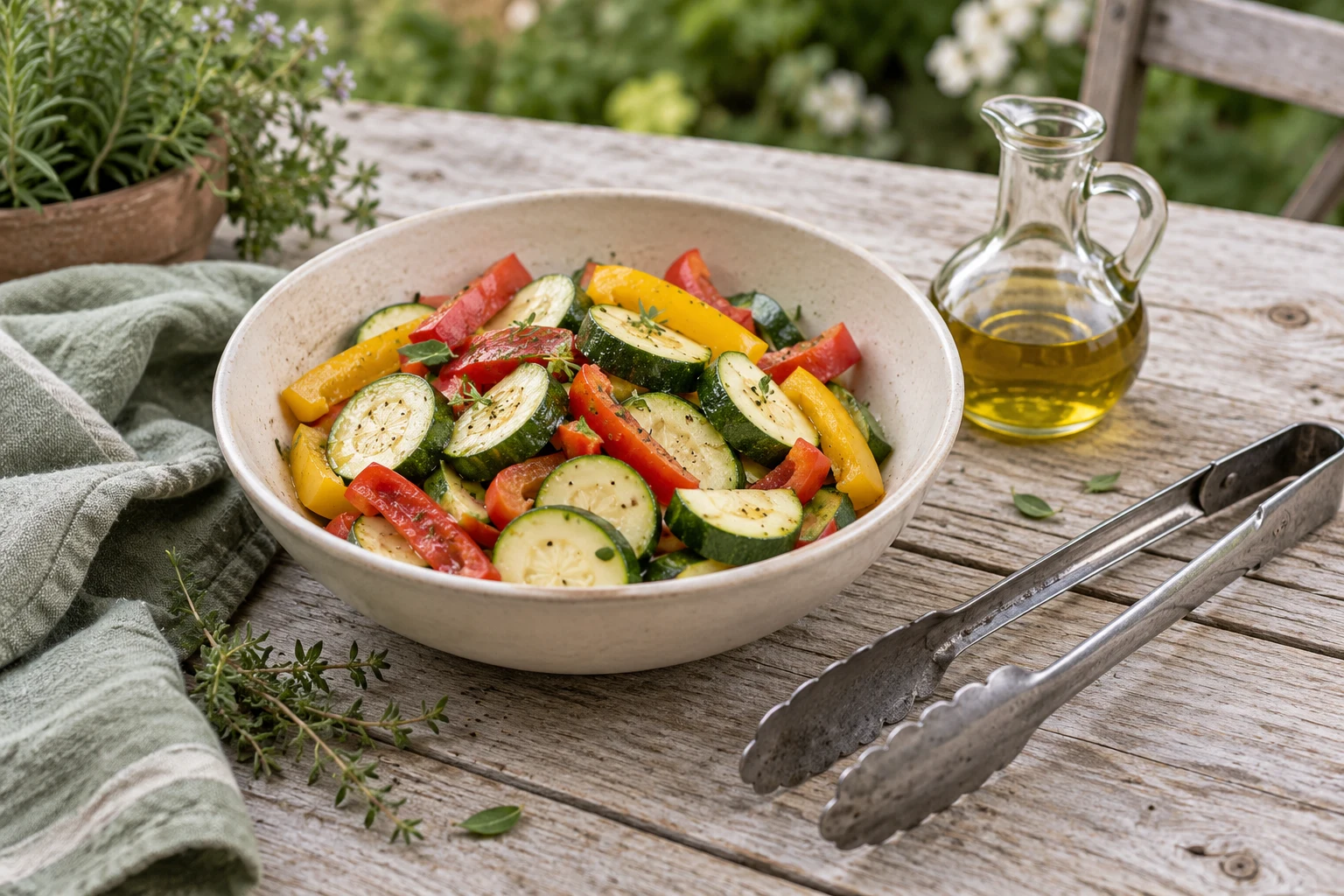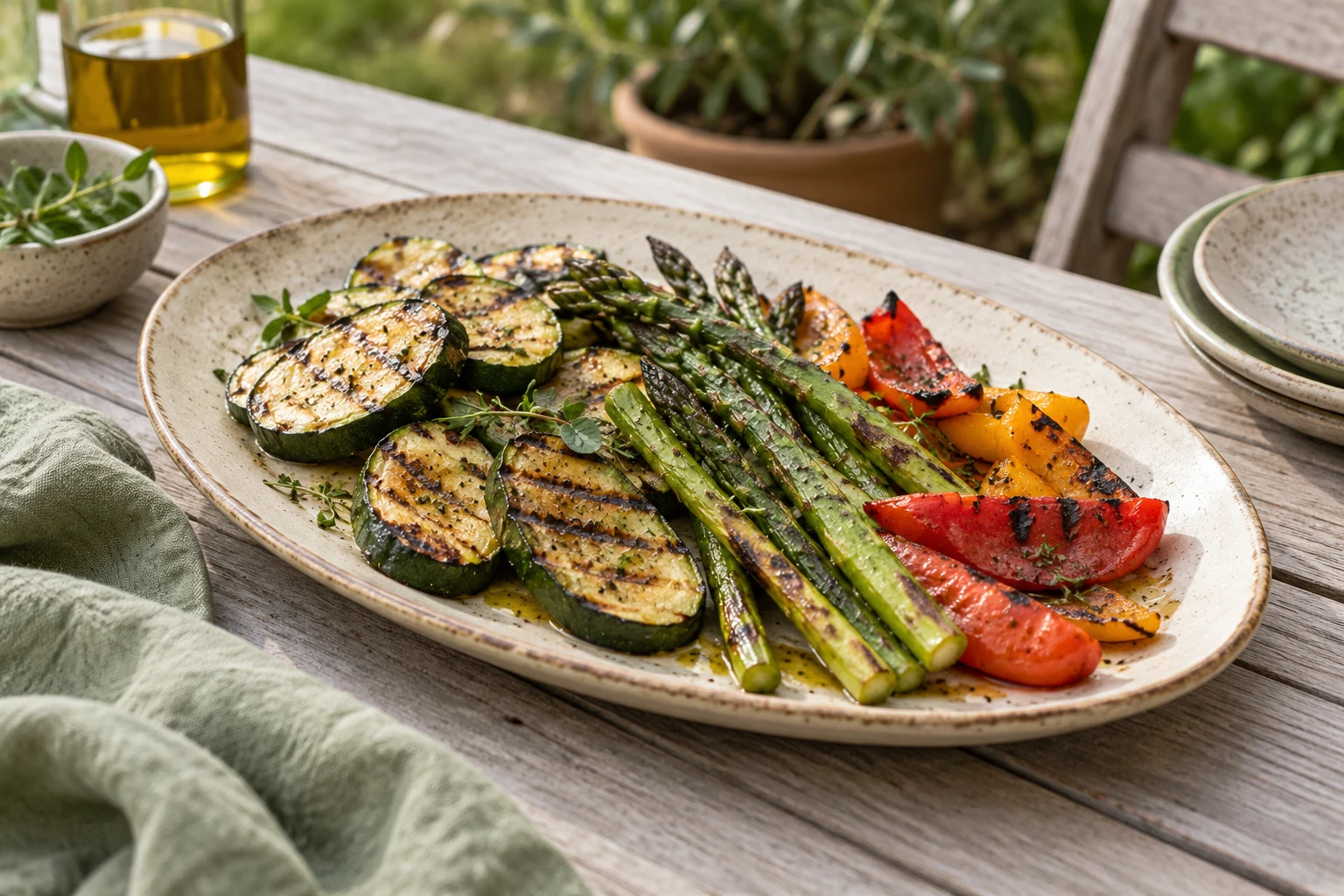
Vegetables are some of the most forgiving foods to cook over fire, but “forgiving” does not mean every vegetable should be treated the same way. The best result comes from matching the vegetable's water content, thickness, and surface area to the heat. A sturdy slice can take direct heat and char. A small tender piece may need a pan, basket, or cooler zone. Once that match is clear, vegetables become a way to learn the grill without the pressure of a large piece of meat.
Choose vegetables by structure
Zucchini, eggplant, peppers, onions, corn, asparagus, mushrooms, cabbage, and firm tomatoes all work well, but they need different handling. Dense vegetables benefit from slices or wedges that expose enough surface to brown while retaining a centre. Long vegetables such as asparagus can be placed across the grate or in a basket so they do not fall through. Mushrooms release water; give them room so they roast rather than steam.
Choose pieces of similar thickness when cooking a group. A thin onion slice beside a thick potato wedge will not finish together. If you want variety, cook in waves or use separate skewers. Small pieces can be threaded onto skewers, placed in a grill basket, or wrapped in foil when the grate gap is too wide. Protection is a cooking decision, not a sign that the food is less suitable for grilling.
Prepare for browning
Dry vegetables before seasoning. Surface water delays browning and can make the food slide or tear when turned. Use a light coating of oil and season in a way that matches the cooking time. Salt draws water from some vegetables if they sit too long; apply it close to cooking when a crisp surface matters. Sugary sauces should be added late because direct heat can burn them before the vegetable softens.
Cut vegetables so the flat side can contact the grate. A flat surface creates useful browning and gives a spatula a place to support the food. Keep small pieces together in a basket rather than spreading them across a grate where they can fall, burn, or be lost during a turn. Have a clean platter ready before the first batch goes on.
Build a useful fire
Preheat and clean the grate before cooking. Create direct and indirect areas so dense vegetables can move away from the hottest spot. Direct heat is useful for corn, peppers, thick onion rounds, and firm slices that need colour. Indirect heat helps potatoes, thick cabbage wedges, or any piece that is browning before the centre is tender.
Avoid a fire so aggressive that flames constantly touch the vegetables. Oil dripping from a basket can cause a flare-up, and a charred exterior can hide a raw centre. If flames rise, move the food to the cooler zone and close the lid when the grill design allows it. Do not pour water onto a grease fire. Manage the fuel, airflow, and heat according to the equipment instructions.
Use the right sequence
Start dense or slow vegetables first. Potatoes may need partial cooking before grilling, depending on the thickness. Corn can tolerate longer heat, while asparagus and thin zucchini finish quickly. Add tender items later or use the cooler area while the first batch develops colour. Turn when the underside has released and the surface has marks, not on a fixed timer.
Keep the lid closed when the grill needs chamber heat, but do not forget that vegetables can overcook quickly. Check the texture with a thin skewer or the edge of a spatula. The food should be tender enough for the intended dish while retaining enough structure to reach the table. If you are making a salad, stop slightly before the final texture because carryover heat continues to soften it.
Avoid the common texture problems
Soft, pale vegetables usually had too much moisture, too little heat, too much crowding, or too much turning. Dry the surface, increase spacing, and allow the grate to recover. Burnt vegetables with a raw centre were exposed to direct heat for too long or were cut too thick for the fire. Move them to indirect heat and close the lid rather than increasing the flame.
If eggplant absorbs too much oil, use a thin coating and watch the heat. If mushrooms become watery, use a hotter, less crowded surface. If onions fall apart, use thicker rounds, a basket, or a skewer. If peppers blister and the skin blackens, decide whether you want a deeply charred pepper or a softer, lightly marked one and control the distance accordingly.
Build flavour after the fire
A grilled vegetable already has smoke, char, and sweetness from heat. Finish with acid, herbs, a small amount of cheese, toasted seeds, or a sauce served at the table. Adding a heavy wet sauce before grilling can wash away seasoning and create flames. Keep finishing ingredients separate from raw-food tools and serve on a clean dish.
Different vegetables can share a meal without sharing a cooking time. Cook them according to structure, then combine them after they are ready. That approach gives the plate contrast instead of one uniform texture. It also makes a mixed grill easier to repeat because each decision has a reason.
Make vegetables part of the main plan
Vegetables can fill the cooler zone while meat cooks over direct heat, or they can become the centre of the meal with bread, grains, beans, or a bright dressing. Prepare the serving elements before lighting the grill so the food does not sit unattended while a sauce is being mixed. Keep cold sides cold and follow current food-safety guidance for any cut produce that contains perishable ingredients.
Record the cut size, heat zone, turn point, and final texture. If the next batch is pale, change the surface dryness or spacing before changing the fire. If it burns, change distance or thickness before adding sauce. Grilled vegetables teach heat management because the feedback is visible: water leaves, surfaces colour, and structure changes in front of you.
Sources
- FoodSafety.gov How to Grill Safely: https://www.foodsafety.gov/blog/how-grill-safely-summer
- CDC Preventing Food Poisoning: https://www.cdc.gov/food-safety/prevention/index.html
- NFPA Grilling Safety: https://www.nfpa.org/education-and-research/home-fire-safety/grilling