Burger flare-ups are usually a control problem rather than a requirement of good grilling. Fat drips onto an overly hot fire, flames rise, the cook moves the patties repeatedly, and the outside burns before the centre is ready. A better method prepares the patties, creates a cooler escape zone, manages the lid and fuel, and uses temperature for the final safety decision.
Choose and shape the patties
Ground meat should stay cold while it is being shaped. Form patties slightly wider than the buns because they contract during cooking, but do not compress them so tightly that they become dense. Keep the centre no thicker than the edges, or make a shallow indentation that reduces doming. A thick, uneven patty is more likely to brown outside before the centre reaches its target.
Season the surface shortly before cooking. Salt changes the texture of ground meat if it is mixed through too early, while a surface seasoning gives clearer control. Do not press the patties repeatedly once they are on the grate. Pressing releases fat and juices onto the fire and can make flare-ups worse without cooking the centre faster.
Prepare buns, toppings, a clean platter, and a clean spatula before lighting the grill. Raw ground meat tools and serving tools must remain separate. A calm setup keeps the cook from leaving a hot grill unattended while searching for a plate.
Build two heat zones
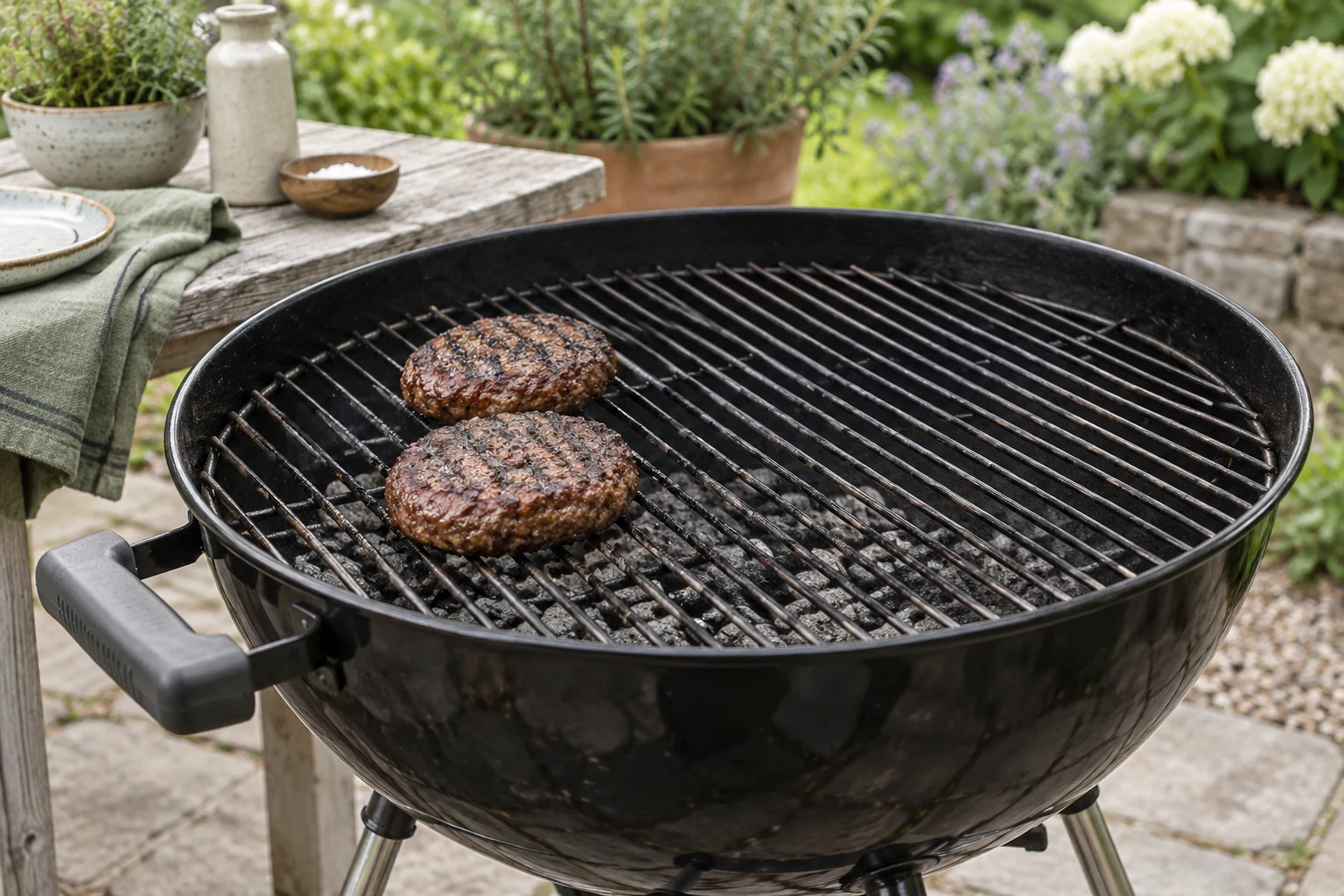
Preheat and clean the grate, then create a direct side and an indirect side. Gas grills can leave a burner unlit; charcoal grills can bank coals to one side. The cooler zone is not a backup after failure. It is part of the design. When fat flames rise, move the patties away from the fire while the lid and airflow bring the heat back under control.
Avoid a grate covered edge to edge with the hottest coals. A little space between patties gives fat somewhere to drip without immediately feeding a flame under every burger. If the grill is too small for the number of patties, cook in batches instead of crowding the surface.
Control fat and flame
A brief flame can happen when fat renders, but a sustained flare-up blackens the crust and creates bitter smoke. If the flames rise, do not wave a spatula through them or move the patties into another flame. Slide them to the indirect zone, close the lid if appropriate, and reduce the fuel or burner according to the grill instructions. Keep a clear path so the cook can step back safely.
Do not pour water onto a grease fire. Water spreads hot fat and can injure the cook. If a fire cannot be controlled with the equipment's normal shutoff procedure, move away and follow local emergency guidance. A burger is never worth leaning over an unsafe grill.
Choose leaner meat if the grill repeatedly produces excessive dripping, but do not assume lean meat solves every problem. A greasy grate, too much oil, a very hot fire, or patties that are too thick can still create trouble. The goal is controlled rendering, not eliminating all fat.
Give the surface time to set
Place patties on the hot grate and leave them long enough to form a crust. Moving too early tears the surface and can leave meat stuck to the grate. When the patty releases, turn it with a thin spatula. Turn once when possible, then move to indirect heat if the outside is ready before the centre.
Avoid pressing the patty. The sound of fat hitting fire may feel like progress, but it represents moisture and energy leaving the food. If cheese is added, do so late and close the lid briefly so it melts without extending the burger's exposure to direct heat.
Toast buns over a moderate area, not directly above the most active flame. Buns burn quickly and leave the cook with another source of smoke just as the patties are finishing. Remove them to a clean plate before handling the cooked meat.
Use temperature for doneness
Ground meat can look browned before the centre is safe. Use a food thermometer at the thickest point, approaching from the side if that gives a more representative reading. Follow current FoodSafety.gov and USDA FSIS guidance for the specific ground meat. Do not touch the probe to the grate, and do not judge safety from juices or colour alone.
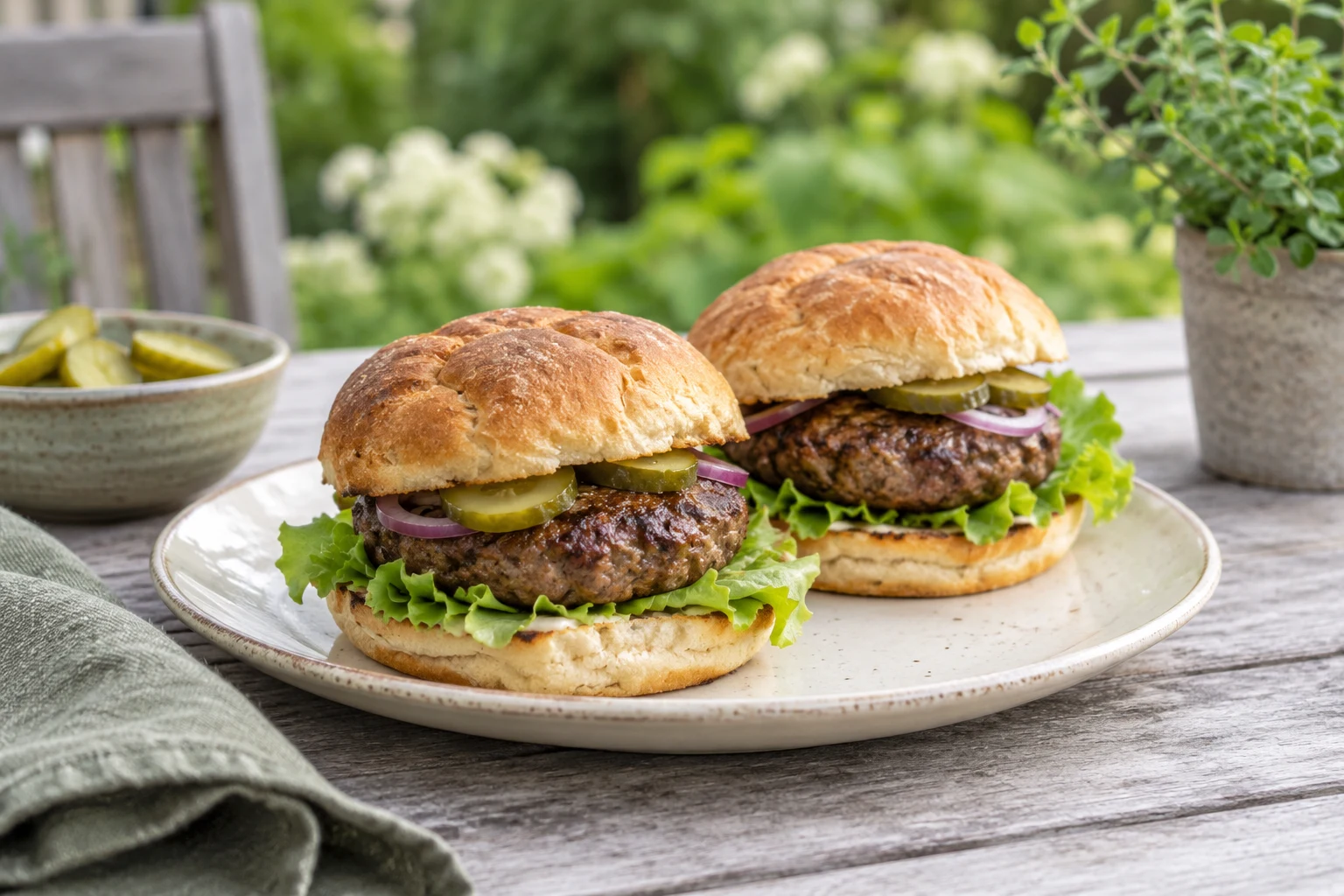
Keep the raw-meat tray away from cooked burgers. Use a clean spatula or wash and sanitise the tool according to safe food-handling practice. Place finished burgers on a clean platter and serve promptly. Leftovers should be handled and cooled according to current official guidance rather than left beside the grill for the afternoon.
Fix the result on the next cook
If burgers burn outside and remain underdone, reduce direct heat, make the patties thinner or more even, and finish on the cooler side. If they dry out, reduce pressing, shorten the direct phase, and check temperature earlier. If the crust is pale, dry the surface, clean the grate, improve preheat, or allow more contact time before turning.
If one part of the grill always flares, note the hot spot and reserve it for short searing rather than using it for the entire cook. A burger meal becomes repeatable when the fire has an escape zone, the patties are shaped consistently, and the cook waits for evidence before turning.
Sources
- FoodSafety.gov Safe Minimum Internal Temperatures: https://www.foodsafety.gov/food-safety-charts/safe-minimum-internal-temperatures
- USDA FSIS Safe Temperature Chart: https://www.fsis.usda.gov/food-safety/safe-food-handling-and-preparation/food-safety-basics/safe-temperature-chart
- NFPA Grilling Safety: https://www.nfpa.org/education-and-research/home-fire-safety/grilling