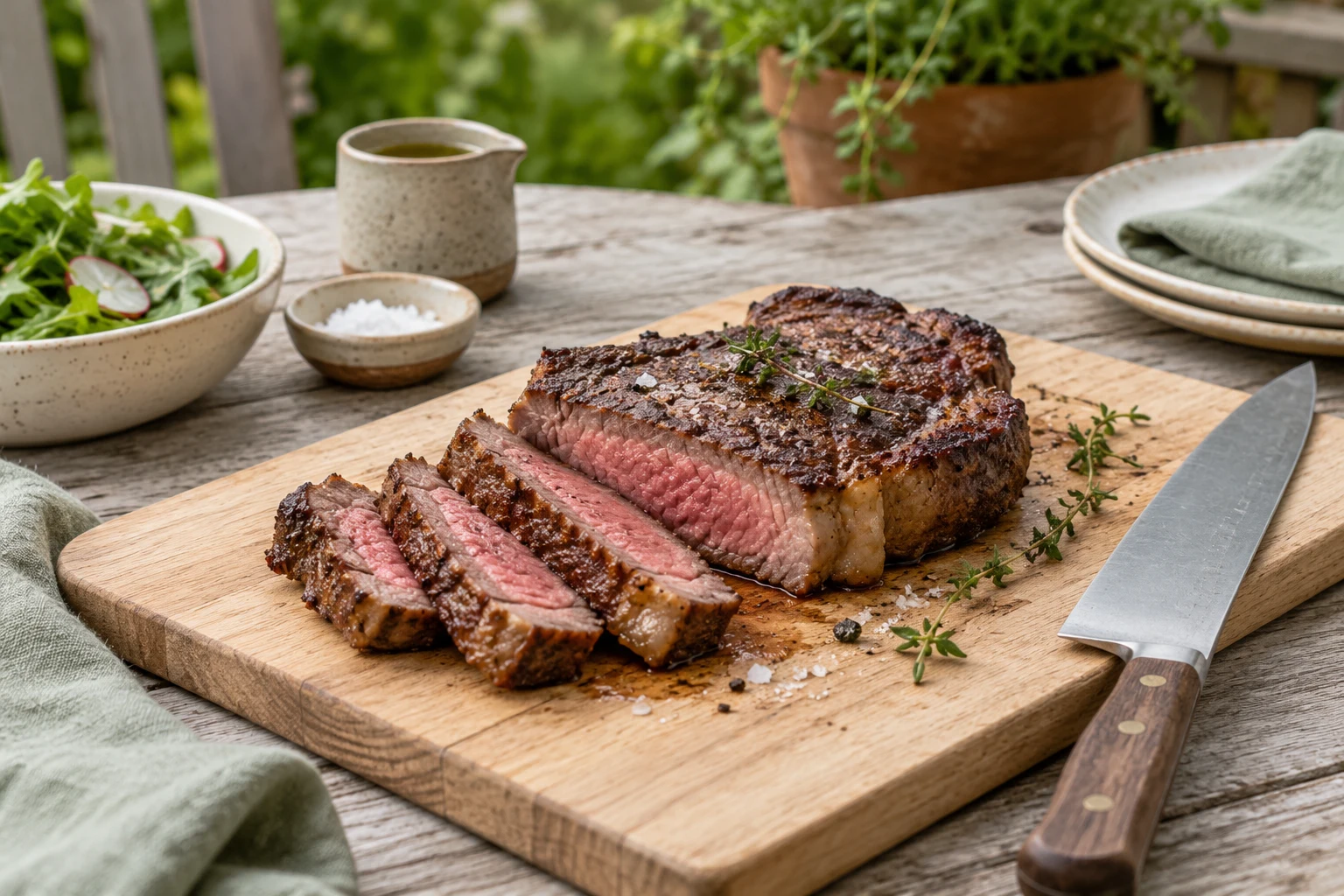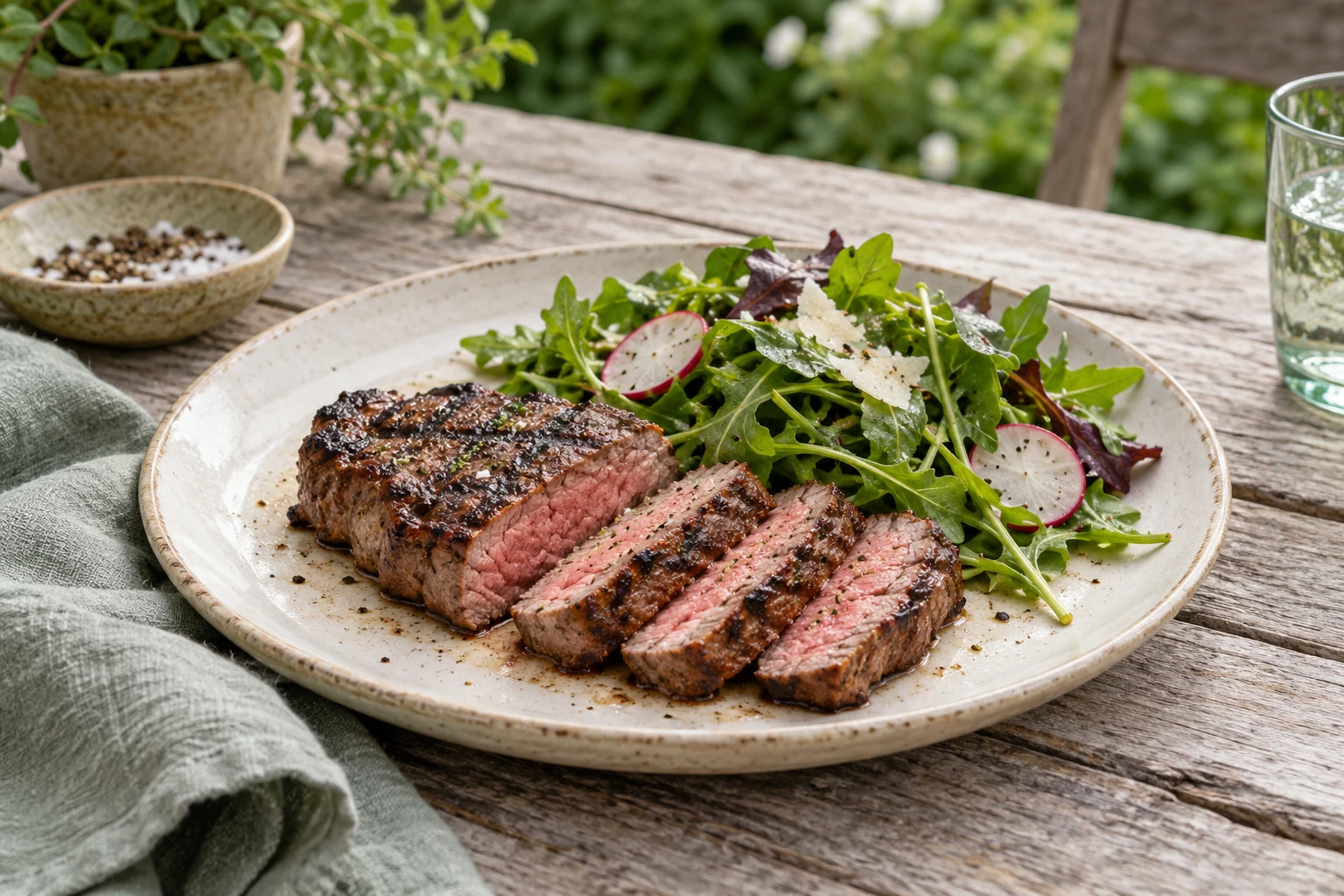
“Perfect” steak is not one thickness, one cut, or one doneness. It is a steak whose surface, centre, seasoning, and serving temperature match the cook's intention. The reliable method is to choose a cut that suits the fire, dry the surface, create direct and indirect zones, sear with purpose, and use a thermometer rather than relying on colour alone.
Choose the cut and thickness
Thin steaks cook quickly and need close attention because the surface can burn before the centre is ready. Thick steaks give more room to create a crust and control the centre separately. Fat distribution, bone, starting temperature, and cut shape all affect timing. Choose a piece that fits the number of people and the grill rather than buying the largest cut available.
Keep the steak chilled until preparation, then pat the surface dry. Surface moisture creates steam and delays browning. Trim loose edges that will burn, but do not remove useful fat. Season with salt and pepper or a measured rub, and avoid a wet coating when a dry crust is the goal.
Build a two-zone fire
Preheat and clean the grate. Create a hot direct side and a cooler indirect side. A thick steak can start over indirect heat and finish with a short sear, or sear first and finish away from the fire. A thin steak may need only direct heat, but the cooler zone still protects it from a flare-up or a surface that is advancing too quickly.
Use a grate-level thermometer when possible. The lid display may describe the air above an empty area rather than the surface under the steak. Leave space between steaks so fat can drip without creating a continuous row of flames. Keep tongs, a thermometer, and a clean resting plate ready before the meat goes on.
Sear with control
Place the steak on the hot grate and let the surface make contact long enough to brown. Turning constantly prevents a crust from forming and makes it harder to learn what the heat is doing. When the steak releases, turn it. If fat causes a flare-up, move the steak to the indirect side and let the fire settle. Do not press the meat; pressure releases juices and feeds the flame.
For a thick steak, use indirect heat to bring the centre close to the desired temperature, then sear briefly over direct heat. This reduces the time the surface spends over aggressive fire. If searing first, move the steak away from the heat before the crust becomes bitter. The best sequence is the one that gives both the surface and centre the right rate of cooking.
Use temperature, not colour alone
A browned exterior cannot tell you the exact state of the centre. Insert a thermometer from the side into the thickest part without touching bone or the grate. Use the target that matches the desired doneness and account for carryover heat after the steak leaves the grill. If cooking for guests with different preferences, plan separate pieces or finishing zones instead of cutting into every steak repeatedly.
Food safety remains separate from steak preference. Use current official guidance for handling, keep raw and cooked tools apart, and use a clean platter. A short rest can improve texture, but it does not make an undercooked steak safe. Do not return cooked meat to the raw tray.
Finish without covering the crust
Butter, herbs, pepper, sauce, or a small amount of acid can be added after the steak leaves the direct heat. Avoid a sugary coating over a blazing grate because it can burn before the centre is ready. Rest the steak on a clean plate and slice only when needed. Cutting immediately releases heat and juices before the texture settles.
Slice against the grain when serving a cut with a visible grain. A thick steak can be served whole; a family-style cut may be sliced so several people receive both crust and centre. Keep the serving plan simple enough that the resting period is not lost to last-minute preparation.
Diagnose the result
If the crust is pale, improve drying, preheat, and contact time before adding more fire. If the exterior burns while the centre is late, use more indirect heat and a shorter sear. If the steak is dry, check whether it was too thin for the heat, overcooked while waiting for another piece, or pressed repeatedly. If the flame is aggressive, reduce surface fat over direct heat and keep a cooler zone ready.
Record cut, thickness, fuel, zone order, turning point, internal temperature, and rest. Change one factor next time. A perfect steak is less a repeatable number than a repeatable decision: choose the piece, control the heat, verify the centre, and serve at the right moment.
Cook for a group
For a group, cook pieces in a planned sequence rather than trying to make every steak finish in one instant. Start the thickest pieces earlier over indirect heat, then use the direct zone for final crust. This keeps the serving plate from filling with steaks that are ready at different temperatures and gives each piece a deliberate finish.
Use a clean platter for each finished group, or keep cooked pieces separated from the raw preparation area. If one guest wants a different doneness, use a smaller finishing zone instead of repeatedly cutting into every steak. Keep the thermometer clean between checks and take notes on which pieces were thickest. Planning reduces the temptation to turn up the fire when the real problem is uneven thickness.
Choose the method deliberately
Reverse searing works well for thick cuts because the indirect stage brings the centre forward gradually and the final direct stage builds colour quickly. A direct-first method can work for thinner cuts when the cook can watch the surface closely. Neither method is automatically superior. The right choice depends on thickness, fire stability, desired crust, and how many steaks must finish together.
Let the grill recover before adding another batch. A surface that has lost heat may brown one steak differently from the next. Keep the lid closed during indirect cooking, but open it for a real check rather than repeatedly peeking. A calm fire, dry surface, and clean thermometer produce more reliable results than a complicated seasoning or accessory.
Sources
- FoodSafety.gov Safe Minimum Internal Temperatures: https://www.foodsafety.gov/food-safety-charts/safe-minimum-internal-temperatures
- USDA FSIS Safe Temperature Chart: https://www.fsis.usda.gov/food-safety/safe-food-handling-and-preparation/food-safety-basics/safe-temperature-chart
- FoodSafety.gov How to Grill Safely: https://www.foodsafety.gov/blog/how-grill-safely-summer