Pulled pork rewards patience, but patience alone is not a method. The cook needs a manageable piece of pork, a stable cooker, clean smoke, a plan for the long middle of the cook, and a texture test at the end. The goal is not to force the meat to obey a timetable. It is to create conditions in which connective tissue can soften without the surface drying or the fire becoming unstable.
Choose the cut and size carefully
Pork shoulder or Boston butt is forgiving because it contains enough connective tissue and fat to tolerate a long cook. A smaller piece can finish sooner but may dry more quickly if the cooker is too hot. Choose a shape that fits the cooker with room for airflow. Trim loose flaps and very hard fat, but do not remove every layer that can protect the meat during a long exposure.
Season the pork so the salt and spices support the smoke. A thick, wet coating can slow the surface from setting. If the rub contains a lot of sugar, control the heat and save any additional sweet sauce for the end. Keep the raw pork cold until it is ready to go on the cooker, and prepare separate trays and utensils for raw and cooked food.
Build a stable cooking environment
Let the cooker settle before the pork is added. The exact fuel and temperature depend on the equipment, but the principle is consistent: create a stable range and clean smoke. Heavy, dirty smoke can make the exterior bitter. Add a modest amount of wood and allow it to burn cleanly before deciding that more is needed.
Place the meat where air can move around it. A grate-level thermometer is more useful than relying only on the lid display. Wind, cold weather, fuel size, and lid openings change the cooker. Make one fire adjustment at a time and wait for the response. A series of large corrections usually causes the very swings that make a long cook difficult.
Protect the surface without hiding it
During the first part of the cook, the pork develops colour and smoke character. Keep the lid closed unless the food or fire needs attention. Spraying is optional; repeated spraying is not a substitute for stable heat. Every liquid application cools the surface and every lid opening changes the fire.
As the cook continues, the surface may darken and the rate of temperature rise may slow. That slowdown is normal for a large cut because moisture is leaving the surface. It is not automatically a sign that the cooker has failed. Decide whether to wrap based on the surface, the schedule, and the texture you want. Wrapping can shorten the cook and protect the bark, but it can also soften the exterior.
Manage the long middle
The middle of a pulled-pork cook is where most unnecessary interventions happen. The cook sees a slow reading and raises the fire, opens the lid, adds wood, or wraps too quickly. Each change creates another variable. If the cooker is stable and the pork is safe, let the process continue. Use the time to prepare serving ingredients, check fuel, and make sure a clean resting space is ready.
If the surface is dark but the meat is still firm, move the pork away from the hottest area or use a wrap. If the surface is pale and wet, improve airflow and allow more time uncovered. If the cooker is fluctuating, solve the fuel and vent problem before altering the food. The right correction depends on what the surface and fire are showing you.
Decide doneness by feel
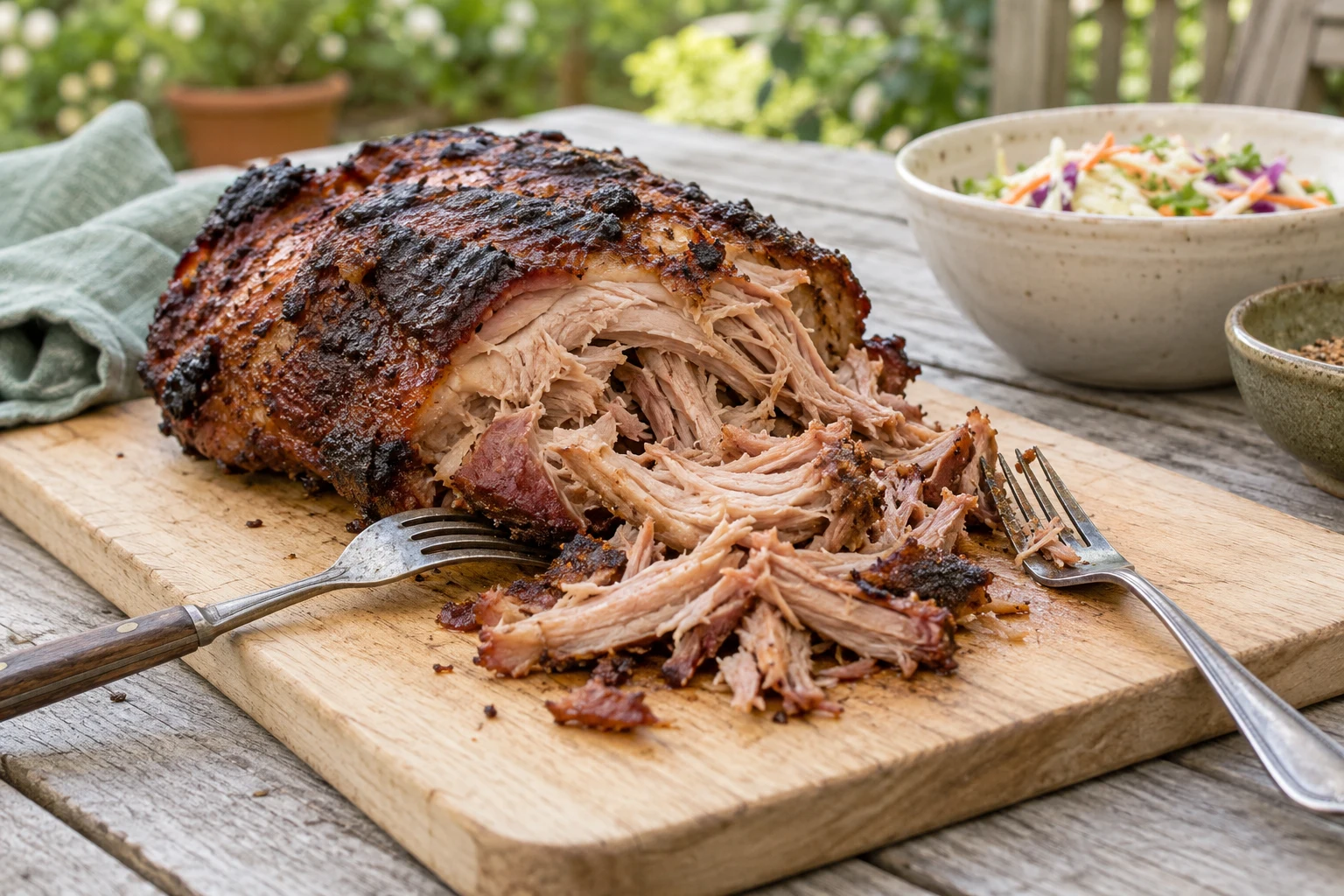
Temperature helps you understand progress, but pulled pork is finished when the probe enters several thick areas with little resistance and the meat can separate into strands. Do not test only the outside or press against the bone. The thickest centre is the important area. If the pork is still tight, return it to stable heat. If the surface is ready but the centre needs time, protect the exterior rather than raising the cooker.
Use current official food-safety guidance for safe handling and internal temperature decisions. A long cook does not remove the need to keep raw meat cold before cooking, prevent cross-contamination, and use a clean platter after cooking. The smoker can tenderise meat, but it cannot correct unsafe storage or careless serving.
Rest before pulling
Resting gives the heat and juices time to settle. Keep the pork protected from contamination and avoid holding it in a way that continues cooking aggressively. When ready, remove large pieces of fat and bone, then pull the meat into strands with clean tools. Taste a small portion before adding sauce. The bark, smoke, and seasoning may already provide enough flavour; sauce should adjust the result, not cover a bitter or burnt surface.
If the meat is dry, consider whether the cooker was too hot, the cut was too small, the surface was exposed too long, or the pork was held after cooking without enough protection. If it is tough, it usually needed more time at a stable heat rather than a hotter fire. If the smoke is harsh, reduce wood and improve combustion on the next cook.
Serve and document the method
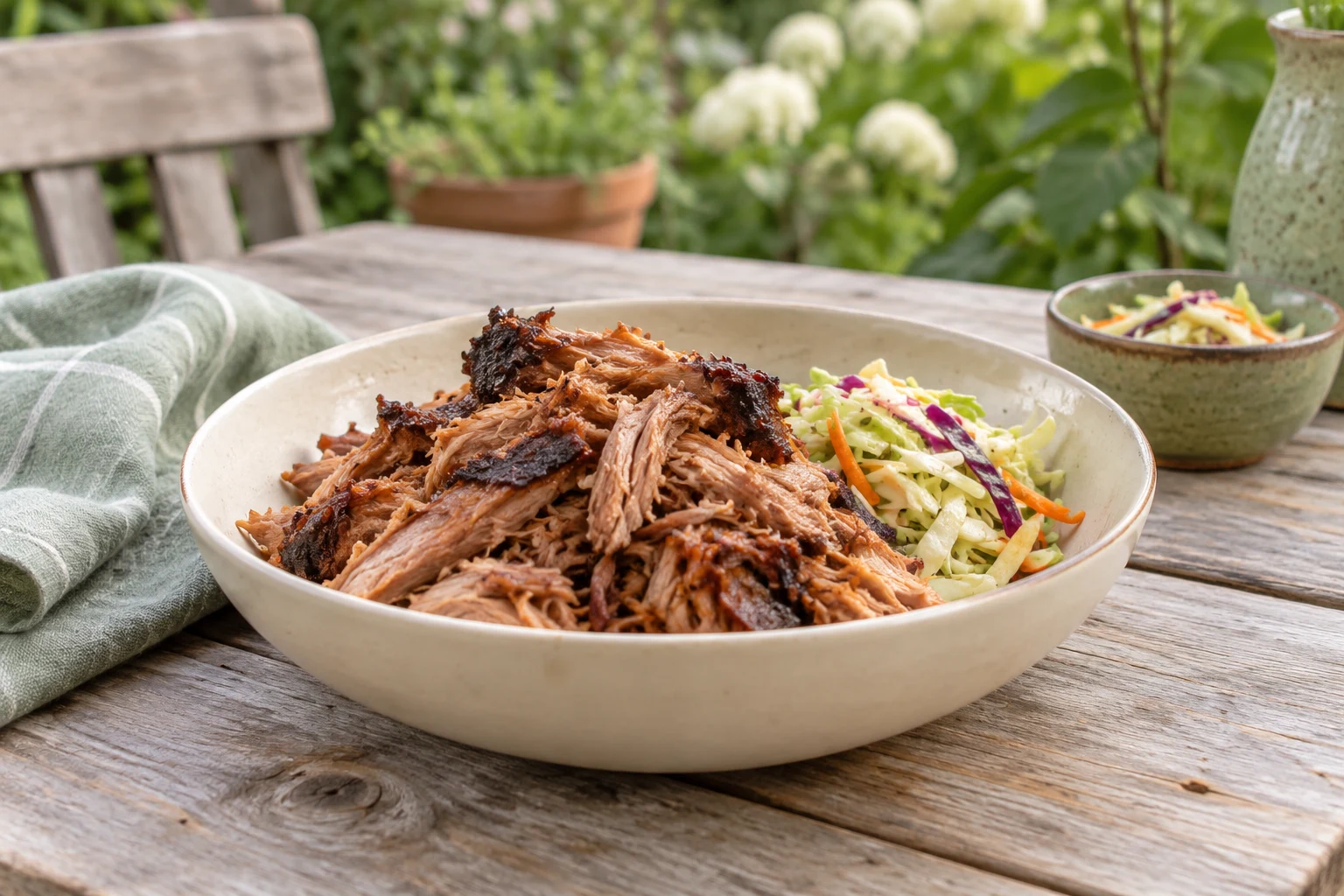
Pulled pork can be served in sandwiches, bowls, tacos, or alongside simple sides. Keep cold sides cold and hot foods hot, and plan portions before the pork reaches the table. The serving format should not force the cook to rush the resting stage.
Record the cut weight, cooker type, fuel, temperature range, wood amount, wrap decision, probe feel, and resting time. The record will reveal whether the next improvement should be fire stability, surface protection, or scheduling. A repeatable pulled-pork method comes from reading the cooker and the meat together, not from treating one popular timetable as a guarantee.
Sources
- FoodSafety.gov Safe Minimum Internal Temperatures: https://www.foodsafety.gov/food-safety-charts/safe-minimum-internal-temperatures
- USDA FSIS Leftovers and Food Safety: https://www.fsis.usda.gov/food-safety/safe-food-handling-and-preparation/food-safety-basics/leftovers-and-food-safety
- FoodSafety.gov How to Grill Safely: https://www.foodsafety.gov/blog/how-grill-safely-summer