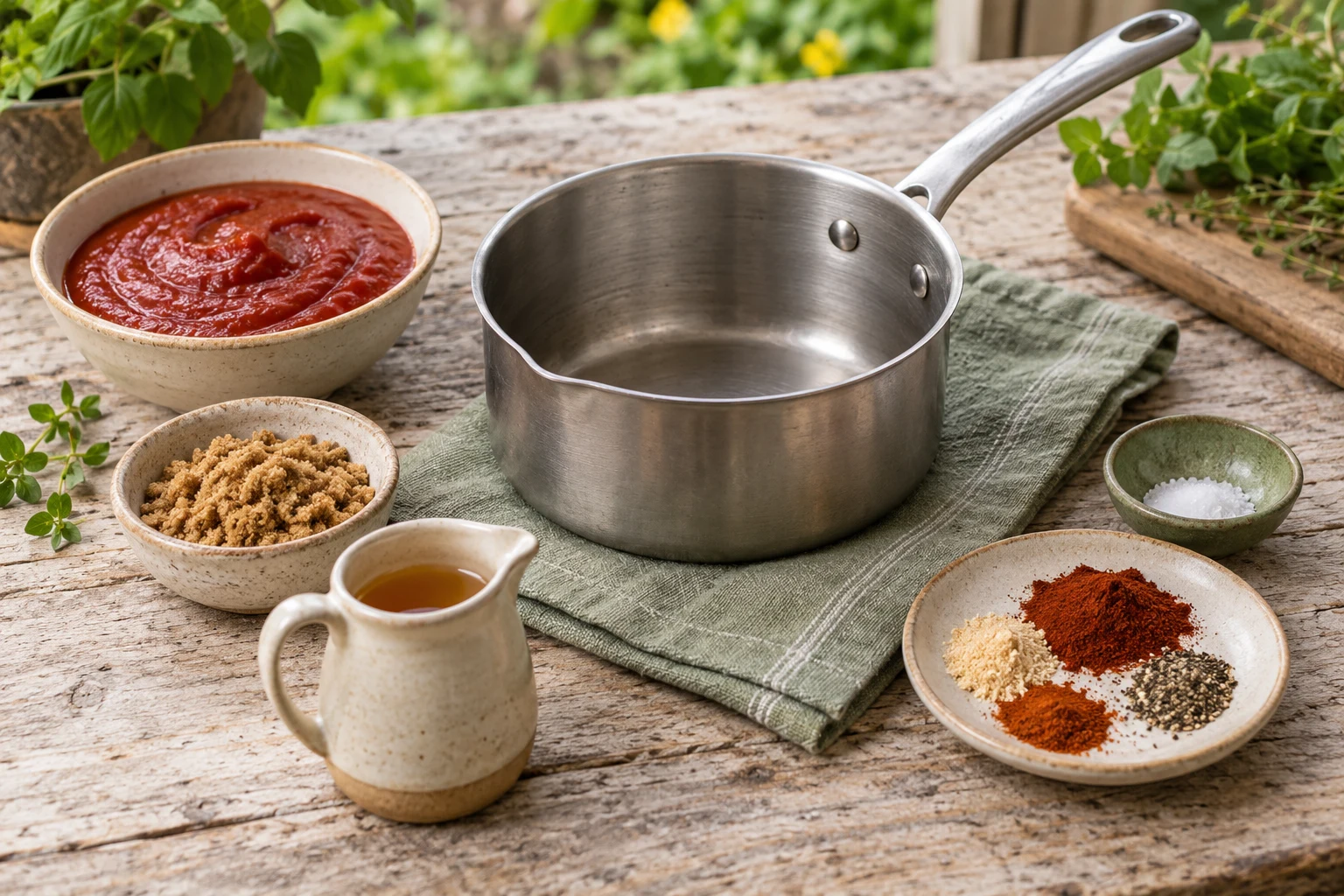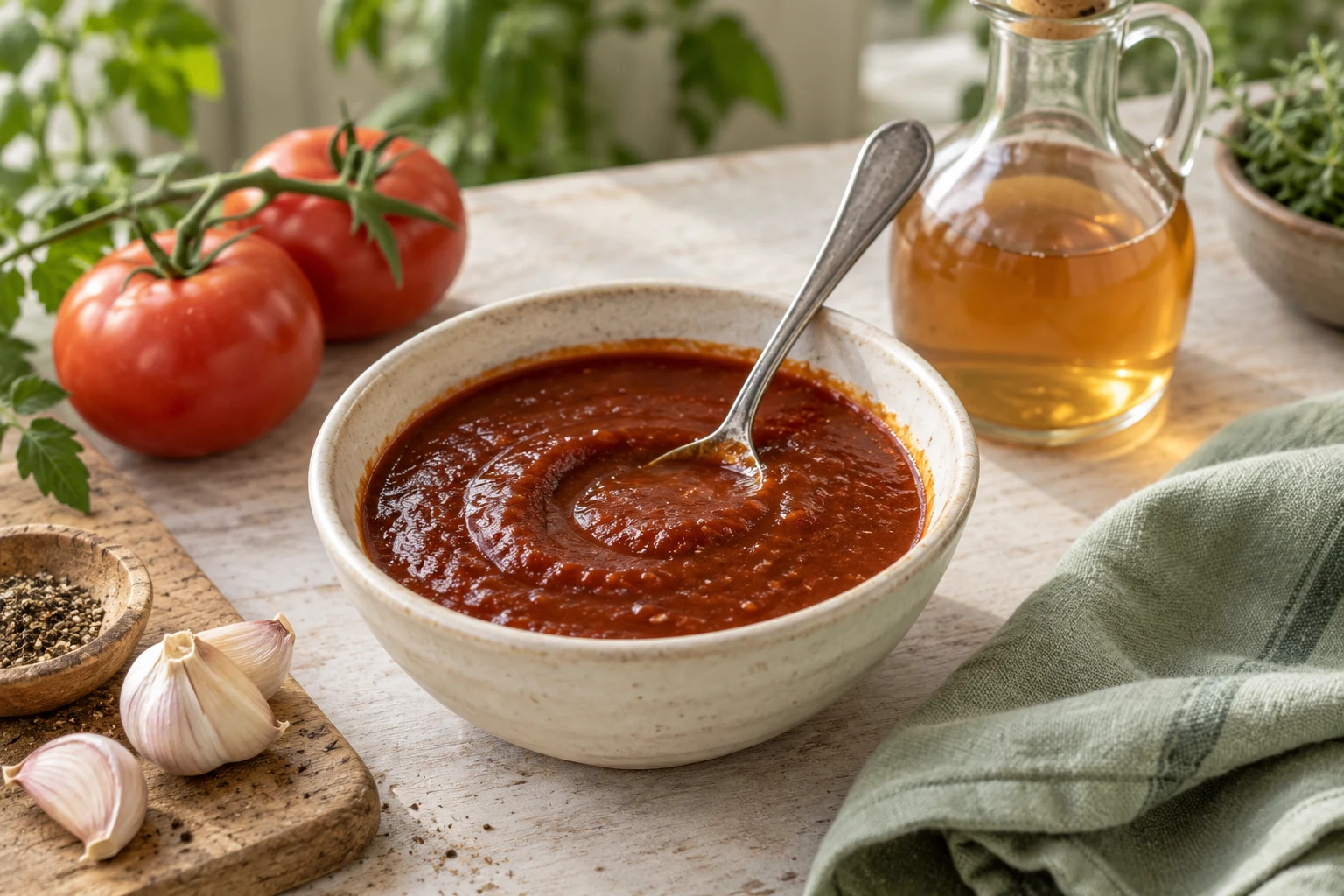
A BBQ sauce should make the food clearer, not cover every mistake with sweetness. Balance comes from deciding what the sauce must do: add acidity to rich meat, add sweetness to bitter smoke, add heat without losing aroma, or provide moisture at the table. A small batch is easier to adjust than a large pot, and a sauce served separately gives the cook more control than a thick coating applied at the start.
Define the centre of the sauce
Most sauces combine a base, sweetness, acidity, seasoning, and sometimes heat. Tomato, vinegar, mustard, fruit, or stock can supply the base. Sugar, molasses, honey, fruit, or brown sugar supply sweetness. Vinegar, citrus, or another acidic ingredient keeps a rich sauce from tasting heavy. Salt, spices, aromatics, and chilli shape the finish.
Choose the centre according to the food. Pulled pork can carry a sharper vinegar sauce. Ribs may work with a glossy sweet-tart glaze. Chicken can take mustard, fruit, spice, or a lighter herb sauce. A heavily smoked brisket may need only a thin accompaniment. The goal is not to make every sauce taste the same.
Balance in small steps
Start with less salt and sugar than you think you need. Reduction concentrates flavour, and meat already brings salt, fat, and smoke. Add acidity gradually and taste after the sauce has cooled slightly. Heat can feel stronger after the sauce rests. A small adjustment is easier to reverse than a large one.
If the sauce tastes flat, ask whether it needs acid, salt, or aroma before adding more sugar. If it tastes sharp, add sweetness or fat in a controlled amount. If it tastes sweet and heavy, increase acidity or serve a smaller portion rather than adding more spices. The solution should match the imbalance.
Cook for texture, not just colour
Simmering can soften onion, garlic, and spice, but a long boil can make a sauce thick and sticky before the flavour has settled. Keep the heat moderate and stir so the bottom does not catch. If the recipe contains sugar, watch the sides of the pan. Burnt sugar tastes bitter and is difficult to rescue.
Strain if you want a smooth finishing sauce, or leave texture when it suits pulled meat and vegetables. Thin the sauce with water, stock, or vinegar if it becomes too dense. A sauce should cling lightly to food instead of forming a heavy shell that burns over direct heat.
Use it at the right stage
Brush sweet sauces late in the cook. Direct heat can burn sugar before the food reaches a safe internal temperature. For ribs, apply a thin layer after the surface has developed and allow it to set over indirect or moderate heat. For chicken, wait until the meat is close to done before glazing. For burgers, offer sauce at the table so the crust remains visible.
Keep a clean portion separate from any sauce that touches raw meat. Never return a used brush to the clean container. If a marinade has contacted raw food, treat it as a raw-food material unless it is handled and cooked safely. Use a clean spoon or brush for finished food and follow current official food-safety guidance.
Match the sauce to the meal
A rich sauce needs a fresh or acidic side. A sharp sauce can pair with fatty pork but overwhelm delicate fish. A spicy sauce needs a mild side or cooling element. Consider the whole plate, not only the pot. A sauce is successful when it helps the main and sides work together.
Serve a small amount first. Guests can add more, but a heavy coating cannot be removed easily. Keep the sauce in a clean serving container and protect perishable ingredients according to current storage guidance. If it contains dairy, fresh herbs, or other sensitive ingredients, plan cold holding.
Test and record
Test the sauce on a small piece of the food after cooking, not only from the spoon. Heat, smoke, fat, and texture change the experience. Record the base, sweetener, acid, salt, cooking time, and the food it accompanied. If the sauce was too sweet, reduce sugar next time. If it lacked brightness, add acid at the end. If it burned, apply it later or move the food away from direct heat.
A balanced BBQ sauce is a tool for contrast. It can be bright, smoky, sweet, hot, or savoury, but it should have a reason to be there. Build a small batch, taste in stages, protect clean portions, and let the fire remain part of the flavour rather than hiding it.
When a sauce separates, becomes too thick, or tastes dull after sitting, make a small correction rather than restarting the whole meal. Whisk in a measured amount of liquid for texture, add acid for brightness, or serve it warm only when the ingredients support warming. The best adjustment is the one that preserves the sauce's role on the plate.
Keep the final tasting tied to the food. A sauce that tastes sharp from a spoon may become balanced against fatty pork, while a sauce that tastes mild alone may disappear on a heavily smoked cut. Test a small portion, record the change, and adjust the batch only after seeing the combination.
Make the sauce useful for service
Separate a finishing sauce from a table sauce when possible. The finishing portion can be brushed in a thin layer near the end; the table portion can remain clean for guests. Label spicy versions and keep serving utensils with the correct container. This avoids a strong sauce becoming the only option and makes it easier to serve children or guests with different preferences.
If the sauce is made ahead, cool and store it according to the ingredients and current food-safety guidance. Bring out only what the meal needs. A small bowl that is replenished is easier to protect than one large container beside the hot grill for the entire afternoon.
Sources
- FoodSafety.gov Safe Minimum Internal Temperatures: https://www.foodsafety.gov/food-safety-charts/safe-minimum-internal-temperatures
- CDC Preventing Food Poisoning: https://www.cdc.gov/food-safety/prevention/index.html
- USDA FSIS Leftovers and Food Safety: https://www.fsis.usda.gov/food-safety/safe-food-handling-and-preparation/food-safety-basics/leftovers-and-food-safety