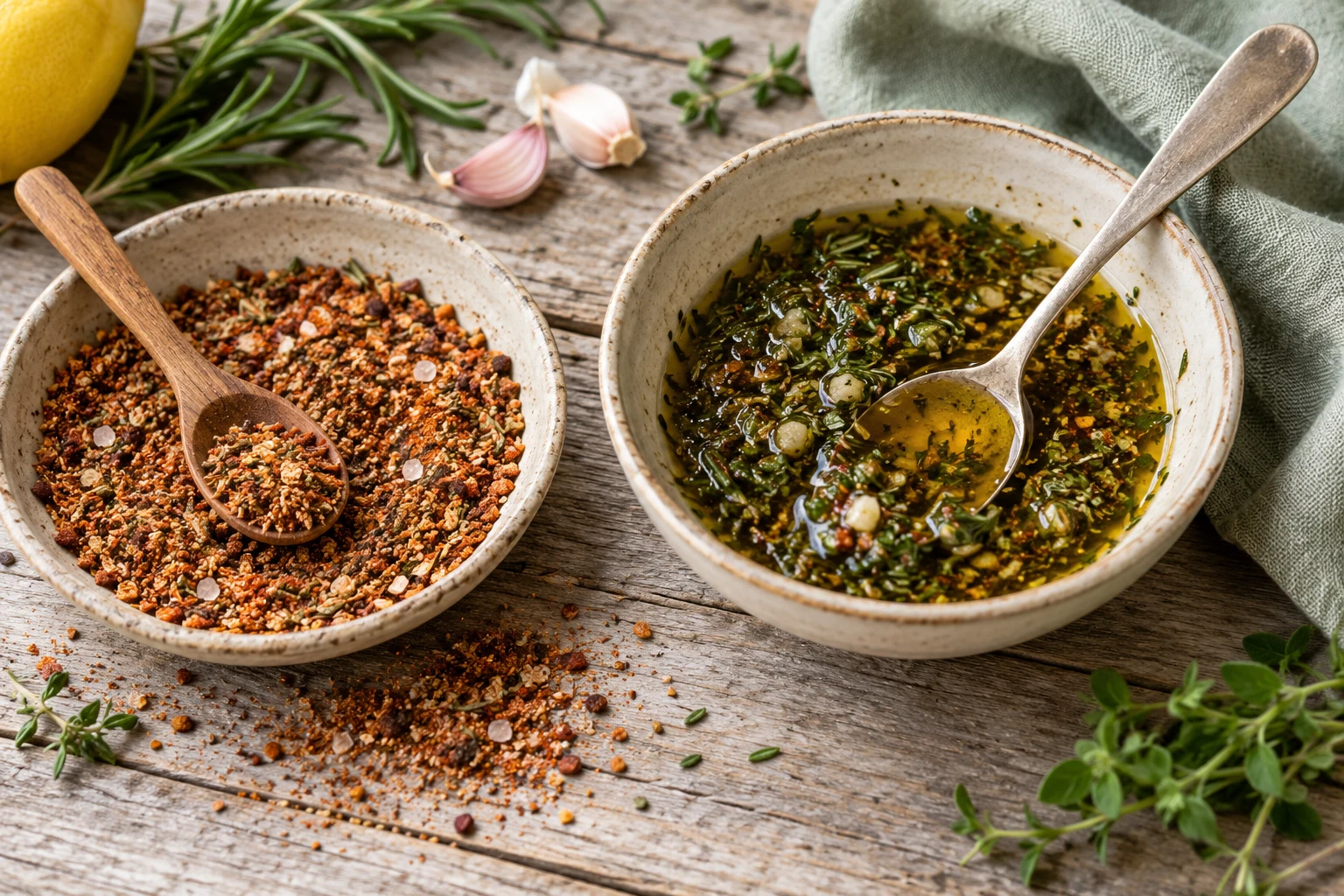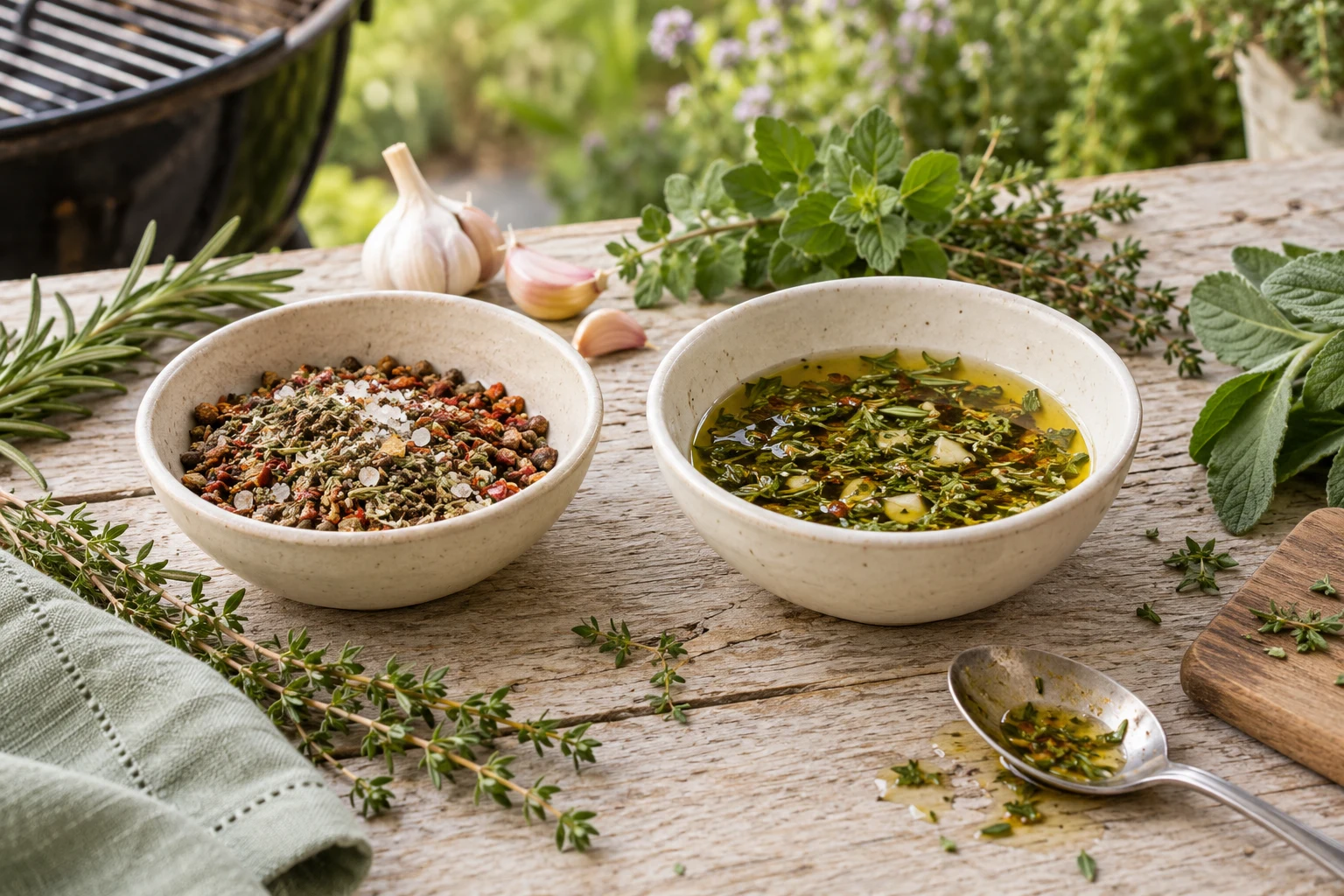
A dry rub seasons the surface with salt, spices, herbs, sugar, or aromatics. A marinade uses liquid, salt, acid, oil, and flavouring ingredients to coat food before cooking. Neither is automatically better. The useful choice depends on cut thickness, cooking heat, desired surface texture, available time, and how the food will be served.
What a dry rub does
A rub creates a concentrated layer on the outside of the food. Salt can season the surface and draw out moisture before the meat is dried again. Spices and herbs add aroma and colour, while sugar can help browning but may burn over aggressive direct heat. A dry surface gives the grate a better chance to create a crust.
Rubs suit ribs, steaks, burgers, chicken pieces, vegetables, and foods where a defined exterior matters. Apply an even layer rather than a thick blanket that hides the food. Press it onto a dry surface, allow the seasoning to rest when the recipe calls for it, and brush away loose excess that may fall into the fire.
What a marinade does
A marinade changes the surface environment with liquid, salt, acid, oil, and aromatics. It can add flavour to thin cuts, kebabs, vegetables, and chicken pieces. It may soften the outer surface, but it does not reliably carry flavour deep into a thick cut. Extra time in an acidic mixture can make the exterior soft or mealy rather than more seasoned.
Use a container or bag that keeps the food coated and chilled. Turn the food if the recipe requires even contact. Pat the surface dry before grilling when browning matters. Wet food can steam, and oil or sugar dripping directly into a flame can cause smoke and flare-ups.
Match the method to thickness
Thin pieces benefit from a marinade because more of their surface is close to the flavouring. A thick steak or roast may benefit more from a rub and careful heat control because the centre will not absorb much liquid. Skewers can use either method, but the pieces should be similar in size so the coating and cooking time match.
Ribs and pork can take a spice-forward rub before a long indirect cook. Fish and delicate vegetables may need a shorter contact time and a lighter coating. A wet marinade is not a substitute for a thermometer, and a rub is not a substitute for the correct cooking temperature.
Protect raw and cooked food
Treat used marinade as raw-meat contact. Reserve a clean portion before adding raw food if it will be served as a sauce. Otherwise, discard it or cook it thoroughly according to a safe method before using it. Never brush used marinade onto food that is already ready to serve.
Use separate tongs and platters for raw and cooked food. Keep the food chilled during marinating, and follow current FoodSafety.gov and USDA FSIS guidance for the specific food. Once food reaches the grill, colour and a fixed number of minutes do not prove that poultry, ground meat, or fish is safe.
Manage sugar, salt, and acid
Sugar helps colour but burns quickly over direct heat. If a rub or marinade is sweet, apply it later or finish on indirect heat. Salt levels should account for the food and any sauce served with it. Acid adds brightness, but too much contact can change texture on the surface. Taste the seasoning in a small test portion whenever possible.
If the finished food tastes flat, add a clean sauce or acid at the table rather than putting more sugar into the fire. If the crust is bitter, reduce direct exposure and inspect the seasoning for loose sugar. If the surface is pale, dry the food better and allow the grate to recover before adding another batch.
Choose a service role
A rub is useful when the crust is part of the serving experience. A marinade is useful when the food needs moisture, aroma, or a quick flavour profile. A sauce can do the final adjustment after cooking. These jobs can be combined: a lightly marinated chicken piece may be dried, seasoned with a small amount of rub, and served with a clean sauce.
Do not combine every flavouring method simply because each is available. A long marinade, heavy rub, sweet glaze, and strong sauce can make the plate muddy and overly salty. Decide which layer should be noticeable and keep the others restrained.
Make the result repeatable
Record the cut, thickness, marinade time or rub amount, grate zone, fire intensity, turning point, and internal temperature. If the surface burned, reduce sugar or move the food away from direct heat. If the food tasted bland, improve salt distribution or serve a brighter sauce. If the centre was late, change the heat path rather than adding more seasoning.
Make a small batch when testing a new flavour. It is easier to adjust a bowl than to rescue a whole cookout. The best choice is the one that supports the food and the fire: a dry rub for a clean crust, a marinade for surface flavour and moisture, and a separate sauce when the table needs flexibility. Before cooking, check the complete plan: contact time, chilling, clean tools, direct or indirect heat, and the serving sauce. That checklist keeps flavour decisions connected to the practical work of the cook.
Sources
- FoodSafety.gov Safe Minimum Internal Temperatures: https://www.foodsafety.gov/food-safety-charts/safe-minimum-internal-temperatures
- USDA FSIS Safe Temperature Chart: https://www.fsis.usda.gov/food-safety/safe-food-handling-and-preparation/food-safety-basics/safe-temperature-chart
- FoodSafety.gov How to Grill Safely: https://www.foodsafety.gov/blog/how-grill-safely-summer