Smoking is controlled cooking with wood influence, not a contest to create the largest cloud. A beginner needs to learn three separate systems: the fuel makes heat, the wood contributes smoke, and the food changes according to thickness, moisture, and time. When those systems are treated as one mystery, the cook chases numbers. When they are separated, the next decision becomes much clearer.
Start with the cooker and the food
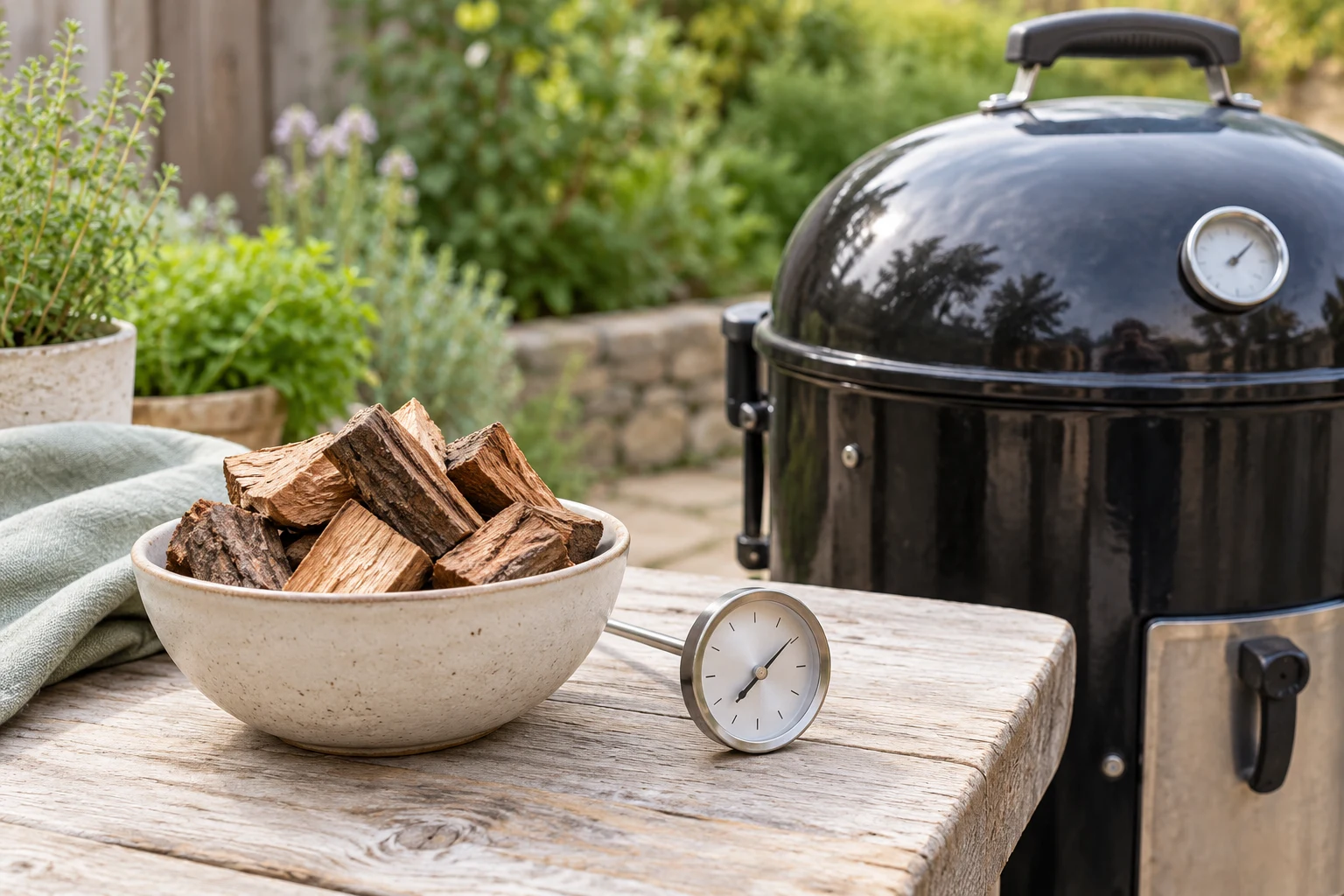
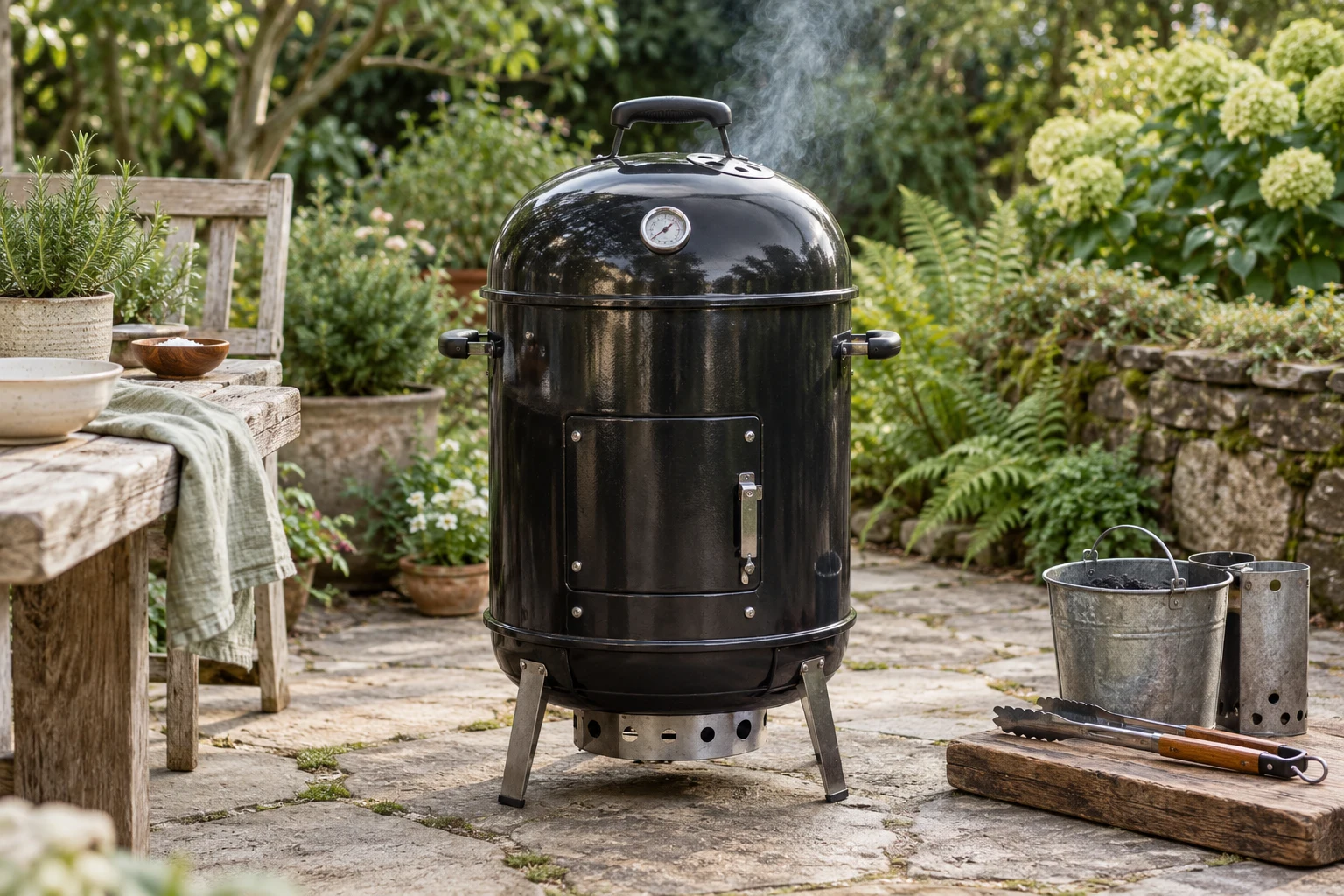
An offset smoker, kettle grill, bullet smoker, pellet cooker, or covered grill can all teach useful smoking habits. They do not behave identically. Before choosing a recipe, learn where the cooker is hottest, how quickly it loses heat when opened, and how the vents change airflow. Put a grate-level thermometer near the food because a lid thermometer can be far from the actual cooking zone.
Choose food that matches the first session. Chicken pieces, sausages, vegetables, fish, and smaller cuts give quicker feedback. Large briskets and pork shoulders require a longer commitment and make it harder to tell whether a fire-management mistake or a cut-specific issue caused the result. A smaller cook is not less serious; it is a more efficient way to learn the cooker.
Keep raw food chilled while the fire is prepared. Set out separate trays for raw and cooked food, and do not let a serving platter touch raw-meat tools. Smoking takes time, but time outside the refrigerator is still a food-safety variable. Use current official food-safety guidance for the food you are cooking rather than using smoke colour as proof of doneness.
Make clean smoke
Clean smoke is usually light and difficult to see against a bright background. Thick white smoke often means the wood is smouldering with too little oxygen, the fire is too cool, or too much wood was added at once. The result can taste harsh even when the food is cooked safely. Add a small amount of suitable wood, wait for the cooker to settle, and judge the aroma before adding more.
Wood choice changes flavour, but control matters more than collecting every species. Start with one familiar wood and use a modest amount. The food should still taste like the ingredient. If you cannot taste the meat or vegetable beneath the smoke, the smoke load is too high for that cook.
Airflow is the bridge between fuel and smoke. A fire needs oxygen, but opening every vent can raise heat beyond the food's needs. Make one adjustment at a time and wait for the cooker to respond. A large correction followed by another large correction creates oscillation: the fire becomes too hot, then too cool, and the cook spends the session chasing the last mistake.
Manage heat as a range
Recipes often state a target temperature, but outdoor cookers move within a range because of fuel, wind, weather, food load, and lid openings. Use the target as a centre point rather than a command to adjust every minute. A steady, slightly imperfect cooker is easier to learn from than a cooker that repeatedly swings between extremes.
Place thicker food closer to the stable part of the cooker and leave room for circulation. A water pan can moderate some cookers, but it cannot repair a badly managed fire. Avoid opening the lid to look at food that does not need attention. Every opening changes airflow and removes heat; the cooker then needs time to recover.
For a grill, build a two-zone fire so food can move away from direct heat. For an offset smoker, manage the firebox and the route of hot air. For a pellet cooker, respect its operating range and avoid constantly overriding the controls. The same principle applies in each case: create a safe place for food when the heat changes.
Follow the food, not only the clock
The surface may darken before the centre is ready. Thin foods can finish quickly, while tough cuts need time for connective tissue to soften. Check the thickest point with a thermometer when the food approaches its safe target, inserting the probe from the side when that gives a better reading. For ribs and other texture-driven foods, combine temperature with a probe test and the way the food bends or yields.
The “stall” associated with large cuts is a change in the rate of cooking as moisture leaves the surface. It is not automatically a failure. Wrapping can speed the cook and protect the exterior, but it changes bark texture. Leaving the cut unwrapped preserves a drier surface but may extend the time. Choose based on the result you want and the condition of the food, not because one method is universally correct.
Sauce belongs late when it contains sugar or when you want the smoke and crust to remain visible. A wet surface can slow browning and a sweet coating can burn. Keep finishing ingredients separate from raw-food contact and use a clean brush or spoon for the cooked food.
Recognise the common beginner traps
Adding too much wood is the most visible trap, but unstable fire is often more damaging. Other common problems include starting before the cooker is ready, placing food in the hottest spot without checking, opening the lid repeatedly, and using a fixed timetable for food of different sizes. None of these mistakes is solved by buying another thermometer. The solution is a smaller decision loop: observe, change one control, wait, and observe again.
Another trap is confusing smoke ring or dark colour with flavour and doneness. Appearance can be useful, but it cannot verify safe internal temperature. A reliable cook can explain the fuel, heat range, food thickness, and finishing decision. That explanation is more valuable than a dramatic photograph.
Build a repeatable record
After the meal, write down the fuel, wood amount, vent or controller changes, grate temperature range, food weight, wrap point, final temperature, and texture. Note weather if it was unusual. On the next cook, change only one item. If the food was bitter, reduce wood. If it was dry, improve stability or shorten exposure. If the centre was underdone, allow more time at the same controlled heat instead of raising the fire until the outside burns.
Smoking becomes easier when it is treated as a series of observable decisions. The fire teaches you through its response, and the food gives you feedback through colour, texture, temperature, and aroma. Start with a manageable cut, clean smoke, a stable range, and a written record. That is enough foundation for more ambitious cooks.
Sources
- FoodSafety.gov Safe Minimum Internal Temperatures: https://www.foodsafety.gov/food-safety-charts/safe-minimum-internal-temperatures
- USDA FSIS Safe Temperature Chart: https://www.fsis.usda.gov/food-safety/safe-food-handling-and-preparation/food-safety-basics/safe-temperature-chart
- NFPA Grilling Safety: https://www.nfpa.org/education-and-research/home-fire-safety/grilling