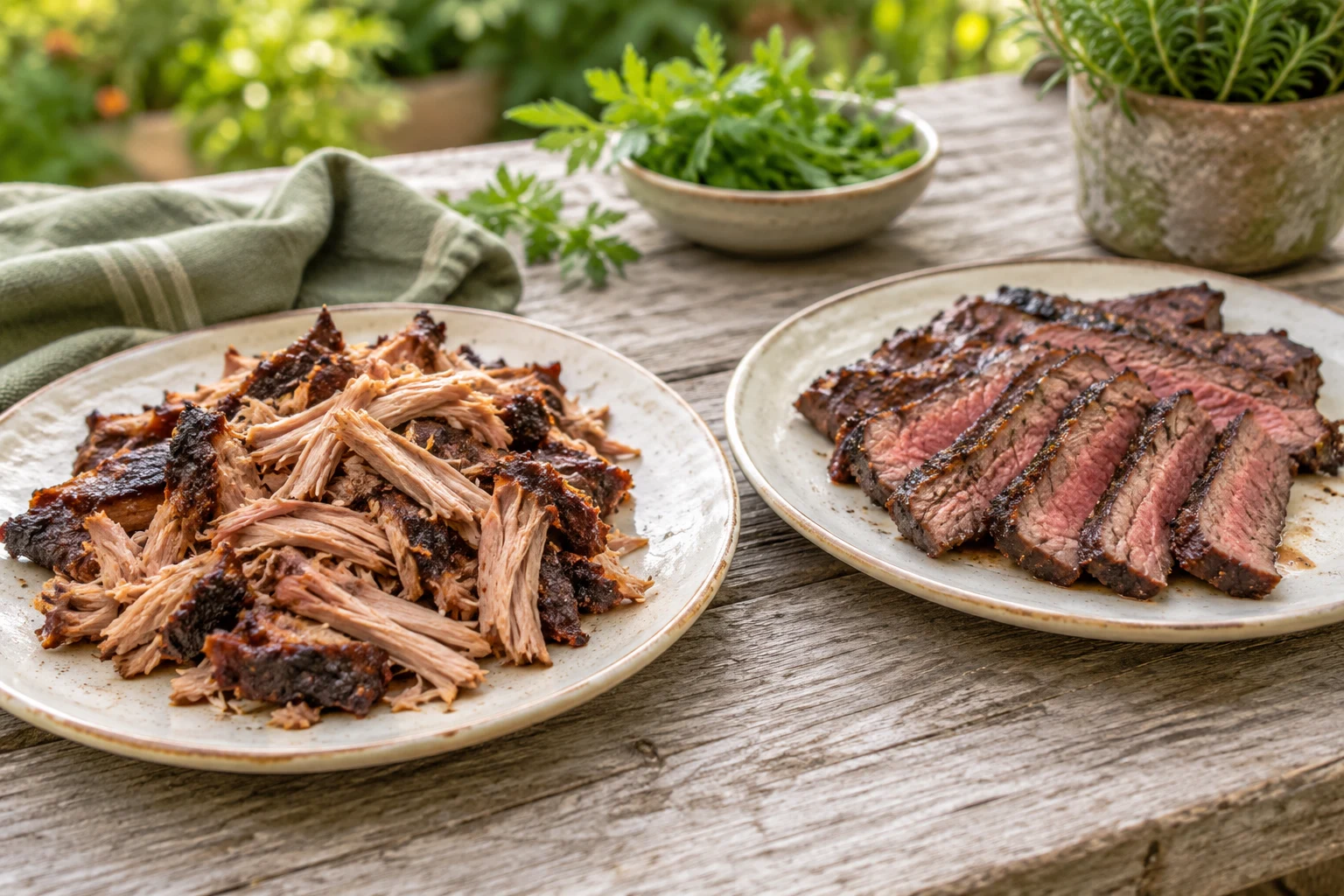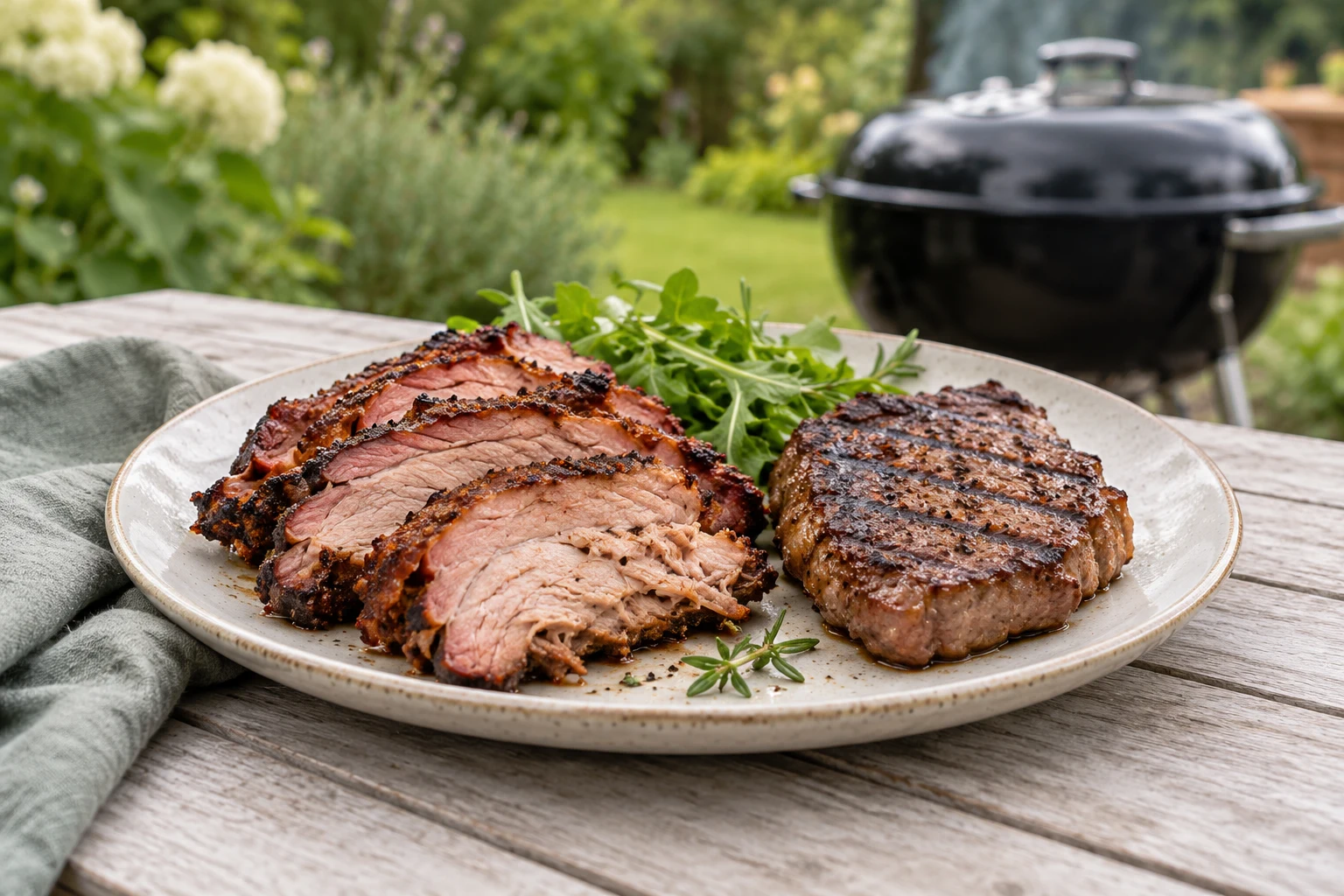
The words barbecue and grilling are often used interchangeably, but the heat plan is different. Grilling is usually hot and relatively fast, with food close to the heat source. Barbecue usually uses lower, steadier heat over a longer period, often with an indirect zone and sometimes clean wood smoke. Understanding the difference helps a cook choose the right food, equipment, and schedule instead of treating every outdoor cook as the same task.
Grilling is a direct, quick method
Grilling places food over direct heat so the surface browns quickly. Steaks, burgers, thin chicken pieces, fish fillets, vegetables, and bread can all work when the grate is hot and the cook watches the timing. Thin food may be finished before the grill has time to recover from a long lid opening, so the pieces should be spaced and turned deliberately.
Direct heat is useful for colour and texture, but it needs an escape route. Fat can create flare-ups, and a sugary sauce can burn before the centre is ready. A two-zone grill gives the cook somewhere to move food while the fire settles. The direct side does the browning; the cooler side protects food from an advancing surface or an unexpected flame.
Barbecue is a controlled, indirect method
Barbecue relies more on distance, time, and a stable cooking environment. Large cuts such as pork shoulder, brisket, and ribs need a slower path so the exterior does not burn before the interior becomes tender. Fuel and vents matter because the cook is managing the temperature of the chamber, not only the contact between food and grate.
Smoke can be part of barbecue, but smoke alone does not define it. Clean combustion, modest wood, and a stable fire matter more than producing a thick cloud. Too much smoke can make food bitter and hide the flavour of the meat. A covered grill with an indirect zone can barbecue food even when the cook uses little or no added wood.
Choose by food and available time
Choose grilling when the food is thin, guests need a quick meal, and the cook can stay near the fire. Choose barbecue when the cut is large, the meal can be planned ahead, and the cook can maintain a steady environment. A thick steak may use an indirect stage followed by a short direct sear, showing that the two methods can be combined rather than treated as rival identities.
Time should shape the menu. A recipe that needs six hours is not a practical choice for a short weekday meal. A burger cooked like a brisket will dry out, while a brisket treated like a burger will remain tough. The cooking method should follow thickness, connective tissue, fat, and the result the cook wants.
Build the right zones
For charcoal, place fuel on one side and leave a cooler side. For gas, use one or more burners for direct heat and leave another area off or low. Preheat and clean the grate. Keep the lid closed when the chamber needs to recover, but open it for checks that change the next decision.
Use a thermometer at the thickest point and follow current FoodSafety.gov and USDA FSIS guidance for the specific food. Colour, smoke, grill marks, and a fixed number of minutes are not enough to prove that poultry, ground meat, or fish is safe. Use a clean platter for cooked food and keep raw tools separate.
Avoid the vocabulary mistake
Calling everything barbecue can lead to the wrong heat and timing plan. A burger needs a different surface temperature and schedule from a pork shoulder. A rib recipe may include a hot finish even though most of the cook is indirect. Read the instructions for heat placement, lid position, and food thickness rather than relying on the label alone.
The distinction also helps when adapting a recipe. If a direct grill recipe is moved to an indirect cooker, the surface may need a finishing sear. If a barbecue recipe is moved to a small grill, the cut may need to be divided or cooked in stages. Keep the goal constant, then adjust the heat path to the equipment.
Compare the results honestly
Grilling rewards fresh browning and quick feedback. Barbecue rewards planning, temperature stability, and patience. Neither is automatically better. Ask whether the food has the surface texture, tenderness, juiciness, and smoke level intended. If the exterior is dark but the centre is late, use more indirect time. If the food is pale, improve surface dryness and direct contact rather than simply adding more fuel.
Write down the fuel, zone layout, grate temperature, food thickness, turning points, and internal readings. A useful note explains what changed. “More smoke” is less useful than “the food sat over direct heat while the lid was open.” Those observations make the next cook more repeatable.
Keep safety separate from terminology
No cooking term changes food-safety requirements. Keep raw food chilled, prevent cross-contact, use clean serving dishes, and follow current official temperature guidance. Use grills outdoors with adequate clearance and never bring a lit charcoal or gas grill into an enclosed space. Control grease and ash according to the equipment instructions.
The useful difference between barbecue and grilling is a decision about heat, distance, and time. Once that distinction is clear, a cook can choose equipment and recipes with less guesswork. The best first cook is the one that leaves enough attention to observe the fire, verify the food, and record what should change next time.
Sources
- FoodSafety.gov Safe Minimum Internal Temperatures: https://www.foodsafety.gov/food-safety-charts/safe-minimum-internal-temperatures
- USDA FSIS Safe Temperature Chart: https://www.fsis.usda.gov/food-safety/safe-food-handling-and-preparation/food-safety-basics/safe-temperature-chart
- FoodSafety.gov How to Grill Safely: https://www.foodsafety.gov/blog/how-grill-safely-summer