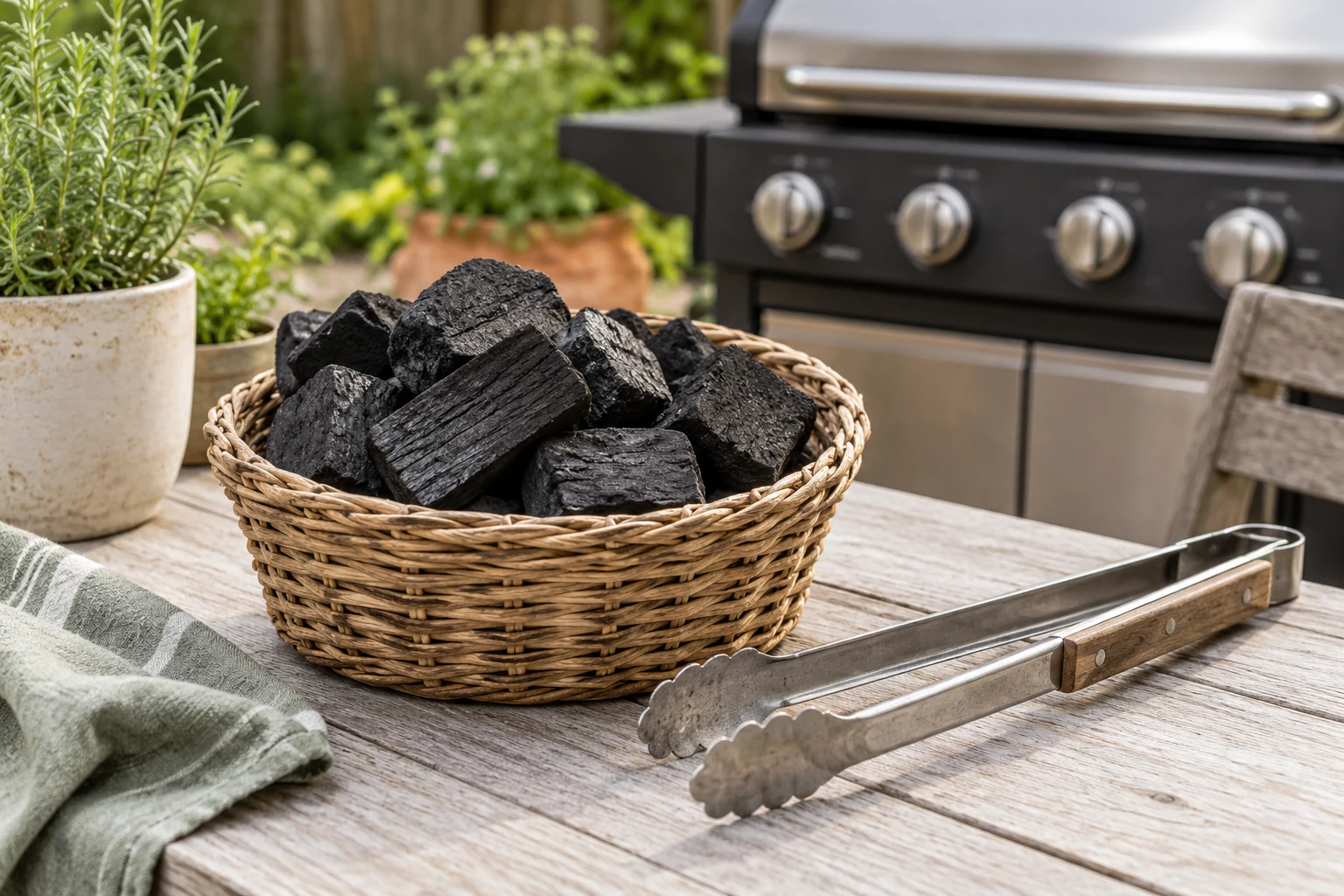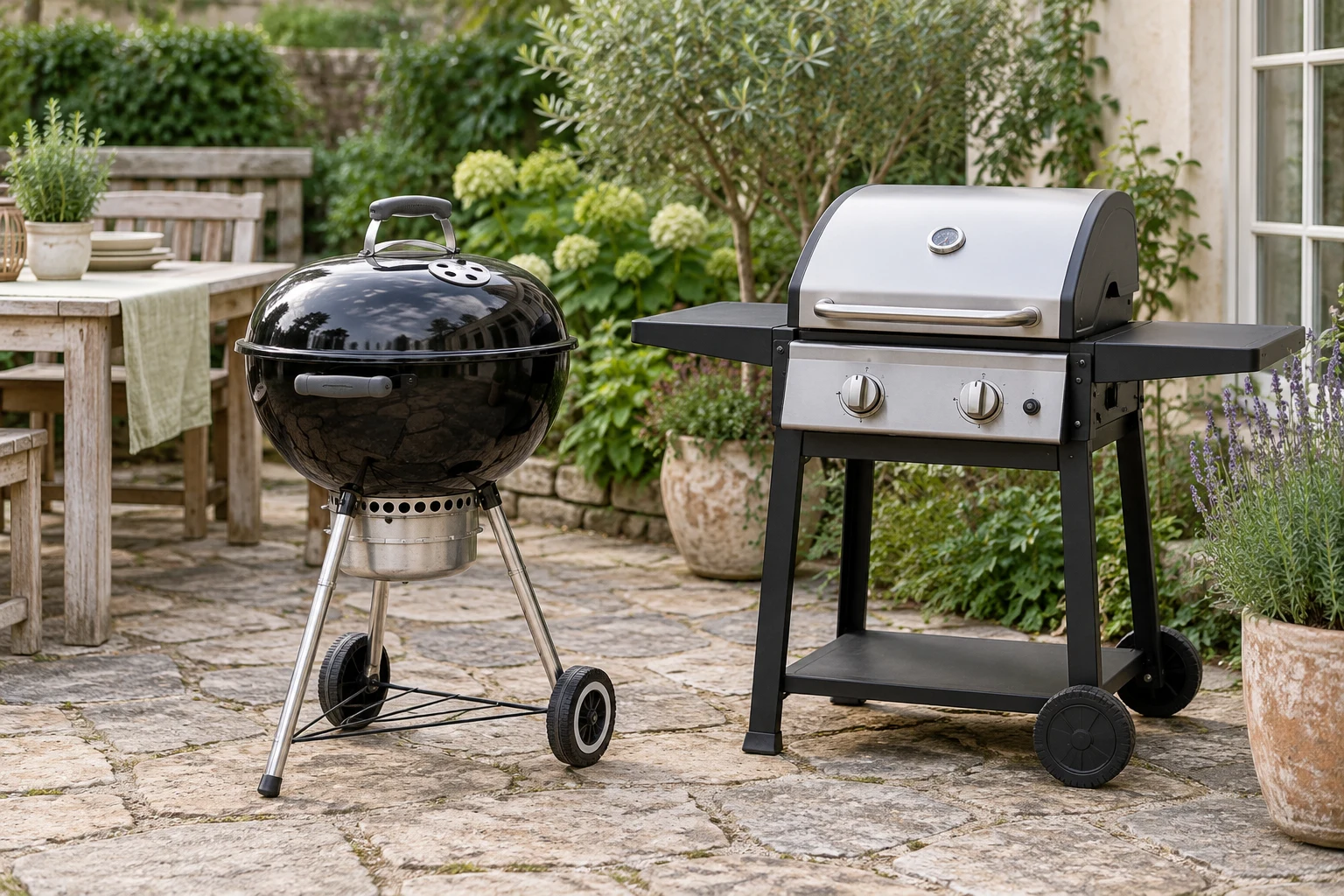
The better beginner grill is the one that matches the cook's space, schedule, safety habits, and willingness to manage fuel. Gas offers quick starts and repeatable burner control. Charcoal teaches ember arrangement, airflow, and the character of live heat. Neither choice guarantees better food. The useful comparison is the work each system asks the cook to do.
Compare the starting routine
Gas grills usually begin with a fuel connection, ignition, and preheat. The heat can be changed quickly by adjusting burners. That makes gas useful for weeknight cooking, repeated temperature changes, and cooks who want to focus on food rather than building a fire. The tradeoff is that burners, regulators, grease trays, and connections need inspection and cleaning.
Charcoal requires fuel, ignition, airflow, and time for the coals to develop cooking heat. A chimney starter can make the process more controlled, but the cook still needs to arrange zones and manage ash and vents. The tradeoff is a longer start and more cleanup, balanced by direct practice with embers and a different smoke and heat character.
Compare control during the cook
Gas responds quickly. A burner can be lowered or turned off, and an unlit side can become an indirect area. The cook still needs to learn hot spots and allow the grate to recover after the lid opens. A gas display does not guarantee that the food surface is even.
Charcoal responds gradually. Fuel amount, coal arrangement, vents, lid position, and wind all matter. The cook should make one adjustment and wait rather than changing every vent at once. A two-zone fire provides a direct side and a cooler side, which is essential for thick food and flare-up control.
Consider the food you will cook
Both grills can cook burgers, chicken, vegetables, fish, steaks, and larger cuts when the cook builds the right zones. Gas is convenient for fast meals and controlled indirect heat. Charcoal can teach the cook how distance and ember intensity affect browning. A covered charcoal grill can also provide smoke, but too much wood or poor combustion can make food bitter.
Choose the grill based on what you will actually cook. If the menu is mostly quick weeknight vegetables and burgers, fast setup may matter more than fuel character. If learning live-fire control is the main goal, charcoal offers more variables to observe. If the cook is in a restricted space, local rules and ventilation should decide before flavour preferences.
Compare safety and maintenance
Use either grill outdoors and keep it away from structures and combustible materials. Gas requires attention to connections, hoses, burners, and grease. Charcoal requires safe ignition, controlled ash, hot-coal handling, and complete shutdown. Never use gasoline or another volatile liquid to light charcoal, and never pour water onto burning grease.
Clean the grate and inspect the grease tray before cooking. Keep children and pets out of the working area. Use a thermometer and follow current FoodSafety.gov and USDA FSIS guidance for the food. Fuel type does not replace safe internal temperature checks or separation of raw and cooked tools.
Choose the one you will use
Price and size matter, but habit matters more. A grill that takes too long to start may be ignored. A grill that is too small may force crowding and poor heat control. A grill that is difficult to clean can create safety problems. Choose stable construction, a lid that closes, enough space for a direct and indirect zone, and controls you understand.
Borrow or test a system if possible before buying a large model. Notice how long it takes to preheat, how it responds to the lid opening, where its hot spots are, and how easy it is to shut down. The first useful feature is not an accessory; it is predictable heat and safe operation.
Build skill without changing everything
Start with one food and record the result. On gas, note burner settings and recovery. On charcoal, note fuel amount, vent position, coal arrangement, and time to readiness. Change one variable at a time. If the food burns, use a cooler zone or lower direct exposure. If it is pale, improve preheat, surface dryness, or finishing contact.
Gas and charcoal are tools, not identities. The beginner who cooks safely and often will learn more than the beginner who buys the most complex equipment. Choose the system that makes the next cook possible, then let observation—not marketing—decide what to improve.
If a household already owns one system, learn its limits before replacing it. A gas grill can teach zones and lid control, while a charcoal grill can teach fuel and airflow. The most useful comparison is often between two cooking sessions with the same food: note start-up time, recovery after opening, hot spots, cleanup, and how much attention the fire required.
Also compare the shutdown routine. Gas needs burners and fuel controls handled correctly; charcoal needs vents closed and ash left untouched until cold. A grill that is easy to light but difficult to shut down safely is not a better beginner tool. Include storage, cleaning, and local safety rules in the decision. Before buying, measure the space around the grill and confirm that the model can be used there legally and safely. A convenient fuel system cannot compensate for poor clearance, weak ventilation, or a location where hot grease and ash cannot be managed.
Sources
- NFPA Grilling Safety: https://www.nfpa.org/education-and-research/home-fire-safety/grilling
- NFPA Grilling Safety Tip Sheet: https://www.nfpa.org/downloadable-resources/safety-tip-sheets/grilling-safety-tip-sheet
- FoodSafety.gov How to Grill Safely: https://www.foodsafety.gov/blog/how-grill-safely-summer